Menu


Start Free $129 Lifetime
Why is it the #1 bulk uploader?
- Insanely fast!
- Maintains folder structure.
- 100% automated upload.
- Supports RAW files.
- Privacy default.
How can you get started?
Download PicBackMan and start free, then upgrade to annual or lifetime plan as per your needs. Join 100,000+ users who trust PicBackMan for keeping their precious memories safe in multiple online accounts.
Trusted by users in 125+ countries.
“Your pictures are scattered. PicBackMan helps you bring order to your digital memories.”

Backup WordPress Site to Google Drive in 3 Quick Ways

Keeping your WordPress site safe through regular backups is essential for any website owner. If your site gets hacked, crashes, or experiences technical issues, a backup can save you countless hours of work and potential revenue loss. Google Drive offers a convenient, secure cloud storage solution for your WordPress backups, and in this guide, I'll show you three quick and effective ways to back up your WordPress site to Google Drive.
Whether you're a beginner or an experienced WordPress user, these methods will help you create reliable backups without technical headaches. Let's explore the three best ways to backup your WordPress site to Google Drive!
Why You Should Backup Your WordPress Site to Google Drive
Before diving into the methods, let's quickly understand why Google Drive is an excellent choice for your WordPress backups:
- 15GB of free storage space to start with
- Affordable upgrade plans if you need more space
- Reliable cloud storage with excellent uptime
- Easy access from any device
- Strong security measures to protect your data
- Simple file management and organization
Now, let's look at the three quickest ways to backup your WordPress site to Google Drive.
Method 1: Using UpdraftPlus Plugin to Backup WordPress to Google Drive
UpdraftPlus is one of the most popular backup plugins for WordPress, with over 3 million active installations. It offers a straightforward way to backup your WordPress site directly to Google Drive.
Step 1: Install and Activate UpdraftPlus
First, you need to install the UpdraftPlus plugin:
- Log in to your WordPress dashboard
- Go to Plugins > Add New
- Search for "UpdraftPlus"
- Click "Install Now" and then "Activate"
Step 2: Configure UpdraftPlus Settings
Once activated, you'll need to configure the plugin:
- Go to Settings > UpdraftPlus Backups in your WordPress dashboard
- Click on the "Settings" tab
- Under "Choose your remote storage," select "Google Drive"
Step 3: Connect to Google Drive
Now you need to connect UpdraftPlus to your Google Drive account:
- Click the “Google Drive” option under remote storage
- Click on "Authenticate with Google"
- A new window will open asking you to log in to your Google account
- Grant permission for UpdraftPlus to access your Google Drive
- You'll be redirected back to your WordPress dashboard
Step 4: Set Up Backup Schedule
Now it's time to set up your backup schedule:
- Go back to the "Settings" tab
- Choose how often you want to backup files (daily, weekly, monthly, etc.)
- Choose how often to backup your database (typically more frequently than files)
- Select how many backup sets to retain
- Click "Save Changes"
Step 5: Run Your First Backup
To run your first backup:
- Go to the "Backup/Restore" tab
- Click "Backup Now"
- Select what you want to include in the backup (database, plugins, themes, uploads, etc.)
- Click "Backup Now" again
UpdraftPlus will now create a backup of your WordPress site and automatically upload it to Google Drive. You can monitor the progress on the same page.
Pros and Cons of Using UpdraftPlus
- Pros:
- User-friendly interface
- Free version available with Google Drive support
- Scheduled automatic backups
- Easy restoration process
- Option to backup specific parts of your site
- Cons:
- Advanced features require premium version
- Large sites may experience timeout issues
- Restoration can be tricky for beginners
Method 2: Using BackupBuddy Plugin for WordPress Google Drive Backup
BackupBuddy is a premium plugin specifically designed for WordPress backups. It offers comprehensive backup solutions with direct Google Drive integration.
Step 1: Purchase and Install BackupBuddy
- Purchase BackupBuddy from iThemes website
- Download the plugin ZIP file
- Log in to your WordPress dashboard
- Go to Plugins > Add New > Upload Plugin
- Choose the BackupBuddy ZIP file and click "Install Now"
- After installation, click "Activate Plugin"
Step 2: Enter Your License Key
- Go to BackupBuddy > Settings in your WordPress dashboard
- Enter your license key in the field provided
- Click "Save Changes"
Step 3: Configure Google Drive as Remote Destination
- Go to BackupBuddy > Remote Destinations
- Click "+ Add New Destination"
- Select "Google Drive" from the list of options
- Click "Add Destination"
- Click "Authorize with Google"
- Log in to your Google account and grant permission
- Enter a name for this backup destination
- Choose a folder in Google Drive (or create a new one)
- Set the file deletion settings based on your preferences
- Click "Add Destination"
Step 4: Create a Backup Profile
- Go to BackupBuddy > Backups
- Click the "Backup Profiles" tab
- Click "Add New Profile"
- Enter a name for your profile
- Select what to include in your backup (database, files, plugins, themes, etc.)
- Click "Add Profile"
Step 5: Schedule Regular Backups
- Go to BackupBuddy > Schedules
- Click "Add New Schedule"
- Select the backup profile you created
- Choose your Google Drive destination
- Set the backup frequency (daily, weekly, monthly)
- Set the time for the backup to run
- Click "Add Schedule"
Step 6: Run a Manual Backup
- Go to BackupBuddy > Backups
- Click the "Backup" button
- Select your backup profile
- Click "Start Backup"
BackupBuddy will create the backup and send it to your Google Drive account based on your settings.
Pros and Cons of Using BackupBuddy
- Pros:
- Complete backup solution
- Migration capabilities included
- Detailed backup customization options
- Excellent support
- Malware scanning included
- Cons:
- Premium plugin only (no free version)
- Can be resource-intensive on shared hosting
- Stepper learning curve than some alternatives
Method 3: Using WP Time Capsule for Real-Time WordPress Backups to Google Drive
WP Time Capsule (now renamed to BlogVault) offers a different approach to WordPress backups with incremental backup technology, which only backs up changed files rather than your entire site each time.
Step 1: Sign Up for WP Time Capsule
- Go to the WP Time Capsule website
- Sign up for an account (they offer a free trial)
- Download the plugin
Step 2: Install and Activate the Plugin
- Log in to your WordPress dashboard
- Go to Plugins > Add New > Upload Plugin
- Choose the WP Time Capsule ZIP file and click “Install Now”
- After installation, click "Activate Plugin"
Step 3: Connect Your WP Time Capsule Account
- After activation, you'll be prompted to enter your WP Time Capsule email
- Enter the email you used to sign up
- Click "Link to WP Time Capsule"
- You'll receive an email with a magic link
- Click the link in the email to connect to your site
Step 4: Connect to Google Drive
- In the WP Time Capsule dashboard, click on “Cloud”
- Select "Google Drive"
- Click "Connect"
- Log in to your Google account
- Grant permission for WP Time Capsule to access your Google Drive
Step 5: Configure Backup Settings
- Go to the “Backup” tab in WP Time Capsule
- Choose what to include in your backups (database, files, plugins, themes)
- Set the backup frequency
- Click "Save Changes"
Step 6: Run Your Initial Backup
- Click "Backup Now" to start your first backup
- The initial backup will take some time as it's backing up your entire site
- Future backups will be incremental and much faster
WP Time Capsule will now create real-time backups of your WordPress site and store them in Google Drive.
Pros and Cons of Using WP Time Capsule
- Pros:
- Incremental backups save storage space
- Real-time backup technology
- Time travel feature to restore to specific points
- Lower server resource usage
- Staging site creation capability
- Cons:
- The free version has limitations.
- Requires an account with the service
- More complex setup than other options
Comparison of the 3 Methods to Backup WordPress to Google Drive
| Feature | UpdraftPlus | BackupBuddy | WP Time Capsule |
|---|---|---|---|
| Price | Free (Premium available) | Premium only ($80+) | Free trial, then subscription |
| Backup Type | Full backups | Full backups | Incremental backups |
| Ease of Use | Very easy | Moderate | Moderate |
| Scheduled Backups | Yes | Yes | Yes (real-time) |
| Restoration | One-click restore | Comprehensive restore | Time travel restore |
| Migration Features | Basic (Premium) | Advanced | Advanced |
| Resource Usage | Moderate | High | Low |
Tips for Effective WordPress Backups to Google Drive
1. Determine the Right Backup Frequency
How often should you backup your WordPress site? It depends on how frequently your content changes:
- For active blogs/e-commerce: Daily database backups, weekly file backups
- For business sites: 2-3 times weekly database backups, weekly file backups
- For static sites: Weekly database backups, monthly file backups
2. Organize Your Google Drive Backup Storage
Create a dedicated folder structure in Google Drive for your WordPress backups:
- Main folder with your website name
- Subfolders for each type of backup (database, full site)
- Consider using year/month organization for long-term storage
3. Test Your Backup Restoration Process
A backup is only valuable if you can restore it when needed:
- Schedule regular test restorations on a staging site
- Document the restoration process for emergencies
- Verify that restored sites function correctly
4. Monitor Your Google Drive Storage Space
Keep an eye on your available Google Drive storage:
- Set up email alerts when storage reaches 80% capacity
- Implement automatic deletion of older backups
- Consider upgrading your storage if needed
5. Secure Your Google Account
Since your backups will be stored in Google Drive, securing your Google account is crucial:
- Enable two-factor authentication
- Use a strong, unique password
- Regularly check account activity
- Be cautious about third-party app permissions
Common Issues When Backing Up WordPress to Google Drive
1. Backup Timeouts
Large sites may experience timeout issues during backup:
- Solution: Split your backup into smaller parts (database separate from files)
- Solution: Increase PHP memory limits and execution time if possible
- Solution: Schedule backups during low-traffic periods
2. Authentication Errors
Sometimes the connection to Google Drive may fail:
- Solution: Re-authenticate your Google account
- Solution: Check for Google API changes
- Solution: Verify your plugin is updated to the latest version
3. Insufficient Storage Space
Running out of Google Drive storage is common with regular backups:
- Solution: Set up automatic cleanup of old backups
- Solution: Upgrade your Google Drive storage plan
- Solution: Exclude unnecessary large files from backups
4. Failed or incomplete backups
Sometimes backups may fail or be incomplete:
- Solution: Check server error logs for specific issues
- Solution: Try manual backups to identify problem areas
- Solution: Contact your hosting provider about resource limitations
5. Slow Backup Process
Backups taking too long can be frustrating:
- Solution: Consider incremental backup solutions
- Solution: Exclude unnecessary files (like logs, caches)
- Solution: Check your server's upload speed
When to Consider Alternative Backup Solutions
While Google Drive is excellent for many WordPress sites, there are situations when you might want to consider alternatives:
For Very Large Websites
If your WordPress site exceeds several GB in size:
- Consider specialized backup services like ManageWP or JetBackup
- Look into server-level backup solutions provided by hosting companies
- Explore Amazon S3 or other cloud storage optimized for large files
For High-Security Requirements
If you handle sensitive data with strict compliance requirements:
- Consider end-to-end encrypted backup solutions
- Look into HIPAA or GDPR compliant backup services
- Implement multi-location backup strategy
For Multiple WordPress Sites
If you manage multiple WordPress websites:
- Consider management tools like MainWP or InfiniteWP with bulk backup features
- Look into managed WordPress hosting with built-in backup solutions
- Explore enterprise-level backup solutions with centralized management
Quick Tip to ensure your videos never go missing
Videos are precious memories and all of us never want to lose them to hard disk crashes or missing drives. PicBackMan is the easiest and simplest way to keep your videos safely backed up in one or more online accounts.
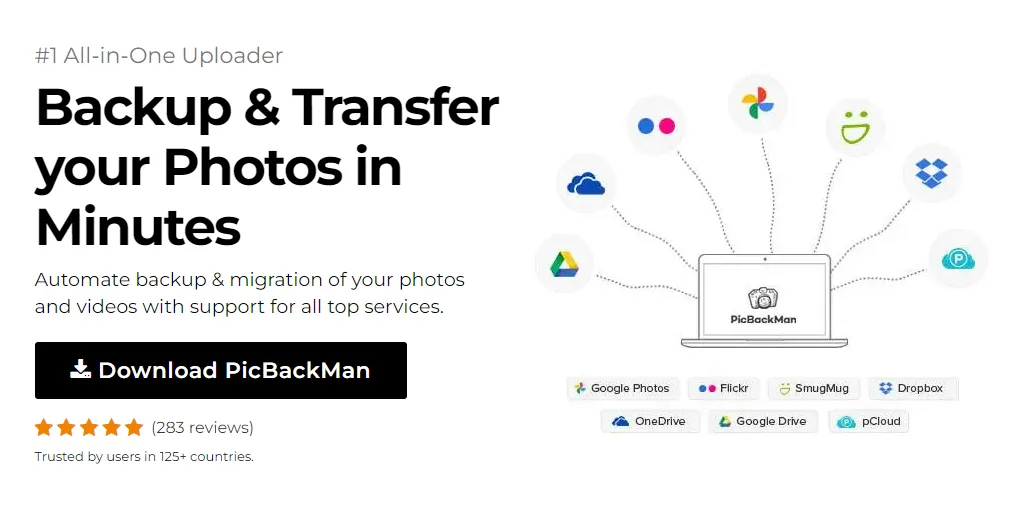
Simply download PicBackMan (it's free!) , register your account, connect to your online store and tell PicBackMan where your videos are - PicBackMan does the rest, automatically. It bulk uploads all videos and keeps looking for new ones and uploads those too. You don't have to ever touch it.
Conclusion
Backing up your WordPress site to Google Drive is a smart, cost-effective strategy to protect your valuable content and ensure business continuity. The three methods we've covered—UpdraftPlus, BackupBuddy, and WP Time Capsule—each offer unique advantages depending on your specific needs.
For beginners or those on a budget, UpdraftPlus provides a straightforward, free solution that works well for most WordPress sites. If you need more comprehensive features and don't mind paying for a premium plugin, BackupBuddy offers excellent value with its migration tools and detailed customization options. For sites that change frequently or those looking to minimize resource usage, WP Time Capsule's incremental backup approach can be ideal.
Remember that the best backup solution is the one you actually use consistently. Set up automated backups, test your restoration process regularly, and keep an eye on your Google Drive storage limits. With these practices in place, you'll have peace of mind knowing your WordPress site is protected against unexpected disasters.
Frequently Asked Questions
1. How much Google Drive space do I need for WordPress backups?
The space needed depends on your site size. A typical WordPress site might require 1-5GB per full backup. If you're running daily backups and keeping multiple versions, you might need 20-100GB of storage. Google Drive offers 15GB for free, with affordable upgrades starting at 100GB for about $2/month.
2. Can I restore my WordPress site directly from Google Drive?
Not directly from Google Drive itself. You'll need to use the same plugin that created the backup (UpdraftPlus, BackupBuddy, etc.) to restore your site. These plugins have restoration features that can import the backup files from Google Drive and properly restore them to your WordPress installation.
3. What should I do if my backup fails to upload to Google Drive?
First, check your Google Drive permissions and make sure the plugin still has authorization to access your account. Next, verify you have enough storage space available. If those aren't the issues, try breaking up your backup into smaller components (separate database and files), or temporarily increase your PHP memory limit and execution time through your hosting provider.
4. Is it safe to store WordPress backups in Google Drive?
Yes, Google Drive is generally very secure with strong encryption and reliable infrastructure. However, for maximum security, you should enable two-factor authentication on your Google account, use strong passwords, and consider encrypting sensitive backup files before uploading them. For highly sensitive sites, you might want to use multiple backup destinations.
5. How often should I backup my WordPress site to Google Drive?
For most websites, backing up the database daily and the files weekly is a good practice. E-commerce sites or highly active blogs might benefit from more frequent backups, even multiple times per day for the database. Static sites that rarely change might only need weekly or monthly backups. The key is to match your backup frequency to how often your valuable content changes.