Menu


Start Free $129 Lifetime
Why is it the #1 bulk uploader?
- Insanely fast!
- Maintains folder structure.
- 100% automated upload.
- Supports RAW files.
- Privacy default.
How can you get started?
Download PicBackMan and start free, then upgrade to annual or lifetime plan as per your needs. Join 100,000+ users who trust PicBackMan for keeping their precious memories safe in multiple online accounts.
Trusted by users in 125+ countries.
“Your pictures are scattered. PicBackMan helps you bring order to your digital memories.”

Dropbox Not Enough Space to Access Folder - Fix in 6 Ways

Running out of space on Dropbox can be incredibly frustrating, especially when you need to access important files. If you've encountered the dreaded "not enough space to access folder" message, you're not alone. This error typically appears when your Dropbox account is full, preventing you from syncing or accessing certain folders.
The good news is that there are several effective solutions to this common problem. In this guide, I'll walk you through six practical ways to fix the Dropbox space issue and regain access to your folders. Whether you're using Dropbox for personal storage or as part of a team, these solutions will help you get back up and running quickly.
Why Does Dropbox Show "Not Enough Space to Access Folder" Error?
Before diving into solutions, it's helpful to understand why this error occurs. Dropbox has storage limits based on your account type:
- Free Basic accounts: 2GB of storage
- Plus accounts: 2TB of storage
- Professional accounts: 3TB of storage
- Business accounts: Various storage options
When you reach or exceed these limits, Dropbox stops syncing new files and may prevent access to certain folders. This happens because Dropbox needs some buffer space to operate correctly and sync your files.
Let's look at six effective ways to resolve this space issue.
Method 1: Delete Unnecessary Files to Free Up Space
The most straightforward solution is to delete files you no longer need. This directly addresses the root cause of the problem by freeing up storage space.
How to Delete Files from Dropbox:
You can delete files through the web interface, desktop app, or mobile app:
Through the Web Interface:
- Log in to your Dropbox account at dropbox.com
- Browse to locate files you don't need anymore
- Hover over the file and click the three dots (...) that appear
- Select "Delete" from the dropdown menu
- Confirm the deletion when prompted
Using the Desktop App:
- Open your Dropbox folder on your computer
- Select files you want to delete
- Right-click and choose “Delete” or press the Delete key
- The files will be removed from your Dropbox
When deciding which files to delete, focus on:
- Large files like videos, high-resolution photos, or software installers
- Duplicate files that exist elsewhere
- Old versions of documents you no longer need
- Downloaded media that you can re-download if needed later
Remember that deleted files go to the Dropbox trash, where they still occupy space. To free up space completely, you need to permanently delete them from the trash.
Emptying the Dropbox Trash:
- Go to dropbox.com and log in
- Click on "Deleted files" in the left sidebar
- Review the files to ensure you don't need them
- Click "Delete permanently" for individual files or "Permanently delete all" to clear everything
Method 2: Move files to local storage
If you have files that you need to keep but don't necessarily need in Dropbox, moving them to local storage is a good option.
Steps to Move Files to Local Storage:
- Open your Dropbox folder on your computer
- Select the files or folders you want to move
- Cut them (Ctrl+X on Windows or Command+X on Mac)
- Navigate to a location on your local hard drive
- Paste the files (Ctrl+V on Windows or Command+V on Mac)
This approach allows you to keep your files while freeing up Dropbox space. For important files, consider creating a backup on an external hard drive as well.
Tips for Organizing Local Files:
- Create a folder structure similar to what you had in Dropbox for easy reference
- Use descriptive folder names to help you find files later
- Consider using local search tools to locate files when needed
Method 3: Upgrade Your Dropbox Plan
If you regularly need more space than your current plan provides, upgrading to a higher-tier Dropbox plan might be the most practical solution.
Available Dropbox Plans:
| Plan | Storage Space | Key Features |
|---|---|---|
| Basic (Free) | 2GB | File sharing, 30-day file recovery |
| Plus | 2TB | Offline access, remote device wipe, 30-day file recovery |
| Professional | 3TB | Smart Sync, watermarking, full-text search, 180-day file recovery |
| Business Standard | 5TB per user | Team folder management, admin console, unlimited recovery |
| Business Advanced | Unlimited | Advanced admin controls, tied admin roles, device approvals |
How to Upgrade Your Dropbox Plan:
- Log in to your Dropbox account at dropbox.com
- Click on your profile picture or initials in the top-right corner
- Select “Settings” from the dropdown menu
- Go to the "Plan" tab
- Click "Upgrade plan" or "Change plan"
- Choose the plan that suits your needs
- Follow the prompts to complete the payment process
Upgrading provides immediate access to more storage, and you won't need to delete or move your files. Consider your long-term storage needs when choosing a plan to avoid running into the same issue again soon.
Method 4: Use Selective Sync to Manage Space
Selective Sync is a powerful Dropbox feature that lets you choose which folders sync to your computer. By using this feature, you can keep files in your Dropbox account without having them take up space on your local device.
How to Set Up Selective Sync:
On Windows:
- Click the Dropbox icon in your system tray
- Click your profile picture or initials
- Select "Preferences"
- Go to the "Sync" tab
- Click "Selective Sync"
- Uncheck folders you don't want to sync to your computer
- Click "Update" to apply your changes
On Mac:
- Click the Dropbox icon in the menu bar
- Click your profile picture or initials
- Select "Preferences"
- Go to the "Sync" tab
- Click "Selective Sync"
- Uncheck folders you don't want to sync to your computer
- Click "Update" to apply your changes
Selective Sync is especially useful for:
- Large folders you rarely access
- Folders shared with you that you don't need on all devices
- Archived projects you want to keep but don't actively use
Remember that files excluded from Selective Sync will still be available through the Dropbox website, but won't be accessible from your local Dropbox folder.
Method 5: Use Smart Sync for More Flexible Storage Management
Smart Sync is an advanced feature available on Plus, Professional, and Business plans. It allows you to see and access all your files locally without actually storing them on your device until you need them.
How Smart Sync Works:
With Smart Sync, files can be in one of three states:
- Local: Stored on both your device and in Dropbox
- Online-only: Visible on your device but stored only in Dropbox
- Mixed: Some files in a folder are local, others are online-only
Setting Up Smart Sync:
- Make sure you have a compatible Dropbox plan
- Install the latest version of the Dropbox desktop app
- Right-click on any file or folder in your Dropbox
- Hover over "Smart Sync"
- Choose "Online-only" to free up local space while keeping the file in Dropbox
Smart Sync is particularly useful for:
- Large files you only need occasionally
- Teams sharing large amounts of data
- Computers with limited storage space
Smart Sync vs. Selective Sync: Key Differences
| Feature | Smart Sync | Selective Sync |
|---|---|---|
| File visibility | All files are visible locally. | Unselected files not visible locally |
| Storage impact | Online-only files don't use local storage | Unselected files don't use local storage |
| Access method | Files open on-demand from cloud | Unselected files only accessible via the web |
| Availability | Plus, Professional, and Business plans | All plans including Basic (free) |
Method 6: Clean Up Shared Folders
Shared folders can take up significant space in your Dropbox account. Managing these folders effectively can help free up space without losing access to important shared content.
Options for Managing Shared Folders:
1. Leave Shared Folders You No Longer Need
- Go to dropbox.com and log in
- Navigate to the shared folder
- Click the share button (person icon)
- Click "Leave folder"
- Confirm your choice
When you leave a shared folder, it no longer counts against your storage quota, but you lose access to its contents.
2. Remove Large Files from Shared Folders You Own
If you're the owner of a shared folder, you can delete large files to free up space:
- Navigate to the shared folder
- Sort files by size (on the web interface)
- Identify large files that aren't essential
- Delete these files after confirming with other members
3. Convert Ownership of Shared Folders
If you've created a shared folder but don't need to be the owner:
- Go to the shared folder on dropbox.com
- Click the share button
- Find the person you want to transfer ownership to
- Click the dropdown next to their name
- Select "Make owner"
- Confirm the transfer
This transfers the storage impact to the new owner while still allowing you to access the folder.
Comparing Storage Impact of Different Dropbox Activities
| Activity | Impact on Your Storage |
|---|---|
| Owning a shared folder | All contents count against your quota |
| Being a member of a shared folder | All contents count against your quota |
| Leaving a shared folder | Contents no longer count against your quota |
| Transferring ownership | Contents no longer count against your quota |
| Receiving shared links | No impact on your storage |
Preventing Future Dropbox Space Issues
After fixing your current space problem, take these steps to prevent running into the same issue again:
Regular Maintenance Practices:
- Schedule regular cleanups: Set a calendar reminder to review and clean your Dropbox every month or quarter
- Monitor your usage: Check your storage usage regularly through the Dropbox dashboard
- Set up storage alerts: Enable notifications when you're approaching your storage limit
- Use the Dropbox desktop app: It shows your storage usage in the account tab
File Management Best Practices:
- Be selective about what you sync: Not everything needs to be in Dropbox
- Use shared links instead of files: For large files you need to share only temporarily
- Compress large files: Use ZIP or other compression formats for files you don't need to edit frequently
- Regularly empty the Dropbox trash: Deleted files still count against your quota until permanently removed
- Use external storage for media: Consider specialized services for photos and videos
Team and Business Account Tips:
- Establish clear file retention policies: Define how long different types of files should be kept
- Use team folders effectively: Organize by department or project to make cleanup easier
- Train team members: Ensure everyone understands best practices for file storage
- Conduct regular audits: Identify unused or redundant content across team spaces
Quick Tip to ensure your videos never go missing
Videos are precious memories and all of us never want to lose them to hard disk crashes or missing drives. PicBackMan is the easiest and simplest way to keep your videos safely backed up in one or more online accounts.
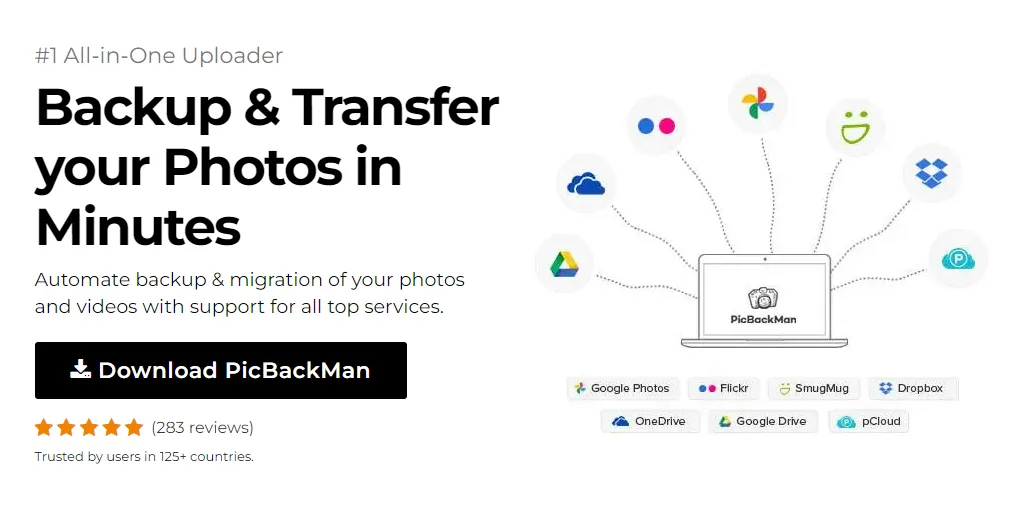
Simply download PicBackMan (it's free!) , register your account, connect to your online store and tell PicBackMan where your videos are - PicBackMan does the rest, automatically. It bulk uploads all videos and keeps looking for new ones and uploads those too. You don't have to ever touch it.
Conclusion
The "not enough space to access folder" error in Dropbox can be frustrating, but it's solvable with the right approach. We've covered six effective methods to fix this issue:
- Delete unnecessary files to free up space
- Move files to local storage
- Upgrade your Dropbox plan
- Use Selective Sync to manage space
- Implement Smart Sync for flexible storage management
- Clean up shared folders
Each method has its advantages depending on your specific situation. For a quick fix, deleting unnecessary files or moving some to local storage works well. For a long-term solution, consider upgrading your plan or making better use of Selective or Smart Sync features.
Remember that regular maintenance is key to preventing storage issues in the future. By implementing good file management practices and periodically reviewing your Dropbox contents, you can ensure smooth access to your important files and folders.
Frequently Asked Questions
Why can't I access my Dropbox folder even though I have space?
If you can't access your Dropbox folder despite having space, the issue might be related to syncing problems rather than storage. Try restarting the Dropbox application, checking your internet connection, or signing out and back into your account. If the problem persists, there might be permission issues or file conflicts that need to be resolved.
Will deleting files from my computer also delete them from Dropbox?
Yes, if you delete files directly from your Dropbox folder on your computer, they will also be deleted from your Dropbox account and all connected devices. However, they'll first go to the Dropbox trash, where you can recover them if needed. To permanently free up space, you'll need to empty the trash through the Dropbox website.
How can I check exactly how much Dropbox space I'm using?
To check your Dropbox space usage, log in to dropbox.com and look at the bottom of the left sidebar. You'll see a storage bar indicating how much of your quota is being used. For more detailed information, click on this storage bar, and you'll see a breakdown of what's using your space, including your files, shared folders, and team folders if applicable.
Does Dropbox Paper count towards my storage limit?
No, Dropbox Paper documents don't count towards your storage quota. You can create and collaborate on as many Paper documents as you want without affecting your available space. However, any files you attach to Paper documents (like images, PDFs, or other files) will count against your storage limit.
Can I recover files after permanently deleting them from Dropbox?
Once you've permanently deleted files from the Dropbox trash, they cannot be recovered through standard Dropbox features. However, if you have a Dropbox Business, Professional, or Plus account, you may have extended file recovery options (up to 180 days for Professional and 30 days for Plus). For Basic (free) accounts, permanently deleted files cannot be recovered, so make sure you truly don't need the files before permanently deleting them.