Start Free $129 Lifetime
Why is it the #1 bulk uploader?
- Insanely fast!
- Maintains folder structure.
- 100% automated upload.
- Supports RAW files.
- Privacy default.
How can you get started?
Download PicBackMan and start free, then upgrade to annual or lifetime plan as per your needs. Join 100,000+ users who trust PicBackMan for keeping their precious memories safe in multiple online accounts.
“Your pictures are scattered. PicBackMan helps you bring order to your digital memories.”

Transfer All Google Drive Files to Another Account in 7 Quick Ways

Need to move your Google Drive files to a new account? Whether you're switching jobs, creating a new personal account, or just organizing your digital life, transferring Google Drive files doesn't have to be complicated. I've put together seven practical methods to help you transfer all your Google Drive files to another account quickly and efficiently.
In this guide, I'll walk you through each method step-by-step, highlighting the pros and cons so you can choose the approach that works best for your situation. Let's dive into these solutions and get your files moved without the headache!
Method 1: Share and Transfer Ownership
The ownership transfer method is perfect when you want to completely hand over control of your files to another Google account. This approach works especially well in work environments where you're leaving a position and need to pass documents to your successor.
Step-by-Step Process:
- Open Google Drive and select the files or folders you want to transfer
- Right-click and select "Share"
- Enter the email address of the account you want to transfer to
- Click the dropdown menu next to the person's name
- Select "Make owner"
- Click "Send" to confirm the transfer
Limitations to Consider:
- Only works with Google's native formats (Docs, Sheets, Slides, etc.)
- You can't transfer ownership of files already shared with you
- Both accounts must be part of the same organization for G Suite/Google Workspace users
- Once ownership is transferred, you can't take it back without the new owner's permission
Pro Tip:
Before transferring ownership, make copies of important files in your account if you want to maintain access to your own version after the transfer.
Method 2: Download and Re-upload Files
This straightforward method works for any file type and doesn't require both accounts to be online simultaneously. It's ideal for personal accounts or when dealing with non-Google file formats.
Step-by-Step Process:
- Sign in to your original Google Drive account
- Select all files and folders you want to transfer
- Right-click and select "Download"
- Wait for the download to complete (files will be packaged as a ZIP archive)
- Extract the ZIP file on your computer
- Sign in to your new Google Drive account
- Click "New" > "File upload" or "Folder upload"
- Select the extracted files/folders and upload them
Considerations:
- Requires sufficient local storage space on your device
- Time-consuming for large amounts of data
- Depends on your internet connection speed
- Google Docs files will be converted to Microsoft Office or other formats during download
- You'll need to re-convert these files if you want them back in Google's native formats
Pro Tip:
If you have a large amount of data, consider transferring in smaller batches to prevent download or upload failures.
Method 3: Use Google Takeout
Google Takeout is Google's official data export tool that allows you to create an archive of your content from Google services, including Drive. This method is perfect for comprehensive transfers.
Step-by-Step Process:
- Go to Google Takeout
- Sign in with your original Google account
- Deselect all services except Drive (click "Deselect all" then check only "Drive")
- Click "Next step"
- Choose your delivery method (email link, add to Drive, Dropbox, etc.)
- Select frequency (one-time export), file type (ZIP), and size (up to 50GB)
- Click "Create export"
- Wait for the export to complete (you'll receive a notification)
- Download the archive
- Extract the files
- Upload to your new Google Drive account
Benefits and Limitations:
- Preserves file structure and organization
- Creates a backup of all your Drive content
- Can handle very large accounts
- The export process may take hours or even days for large accounts
- Some file types may change format during the process
Method 4: Use the Google Drive Desktop App
The Google Drive desktop application allows you to sync files between your computer and Google Drive. This method is excellent for transferring large amounts of data without using browser uploads.
Step-by-Step Process:
- Download and install Google Drive for Desktop
- Sign in with your original Google account
- Wait for files to sync to your computer
- Sign out of the app
- Sign in with your new Google account
- Copy the files from your original Drive folder to your new Drive folder
- Wait for the files to sync to your new account
Important Considerations:
- Requires enough local storage to temporarily hold all your Drive files
- Maintains file formats and structure
- Works in the background while you do other tasks
- Syncing large amounts of data can take significant time
- Your computer must remain on during the entire process
Pro Tip:
You can set up Google Drive for Desktop to mirror only specific folders to save local storage space during the transfer.
Method 5: Share Folders with the New Account
This method allows you to share entire folders with your new account and then save copies to your new Drive. It's simpler than full ownership transfer and works well for most file types.
Step-by-Step Process:
- In your original Google Drive, right-click on the folder you want to transfer
- Select "Share"
- Enter the email address of your new account
- Set permission to "Editor"
- Click "Send"
- Log in to your new Google account
- Go to "Shared with me" section
- Right-click on the shared folder
- Select "Make a copy" (for individual files) or use "Add to My Drive" for folders
- For folders added to your Drive, select all contents and create copies to fully own them
Advantages and Limitations:
- No need to download files to your local device
- Works for most file types
- Preserves file organization
- Time-consuming for complex folder structures as you may need to manually copy files
- "Make a copy" must be done individually for Google Docs, Sheets, etc.
- Some file types won't have a "Make a copy" option
Pro Tip:
After copying shared folders to your new account, organize them immediately to maintain your file structure.
Method 6: Use Third-Party Transfer Tools
Several third-party services can help transfer files between Google Drive accounts. These tools can simplify the process, especially for large transfers.
Using MultCloud as an Example:
- Sign up for a MultCloud account
- Click "Add Cloud" and select Google Drive
- Authorize your original Google Drive account
- Add your second Google Drive account the same way
- Go to "Cloud Transfer"
- Select your original Drive as the source and your new Drive as the destination
- Choose the folders you want to transfer
- Click "Transfer Now" to begin the process
Other Reliable Tools:
- Mover.io
- cloudHQ
- Wondershare InClowdz
- Rclone (for tech-savvy users)
Benefits and Considerations:
- Transfers happen in the cloud without using your bandwidth
- Can schedule transfers to run automatically
- Many services offer free tiers with limited transfer amounts
- Premium features usually require payment
- Requires sharing your account access with a third party
Security Note:
Always research third-party tools thoroughly and check their privacy policies before granting access to your Google accounts. Use reputable services with positive reviews and clear security practices.
Method 7: Use Google Drive Migration Service (For Workspace Admins)
If you're a Google Workspace administrator, you can use Google's Data Migration Service to transfer Drive files between accounts in your organization.
Step-by-Step Process:
- Sign in to the Google Admin console
- Go to "Data Migration" in the tools section
- Select "Drive" as the migration source
- Choose the source account (where files are currently stored)
- Select the destination account (where you want to move files)
- Configure migration options (select specific folders, set permissions, etc.)
- Start the migration
- Monitor progress in the Admin console
Key Benefits:
- Official Google tool with full support
- Maintains file permissions and sharing settings
- Can migrate multiple accounts simultaneously
- Detailed logs and reporting
- Only available for Google Workspace administrators
- Cannot be used for transfers between personal accounts
Comparison of All Transfer Methods
| Method | Best For | Difficulty | Time Required | Bandwidth Usage |
|---|---|---|---|---|
| Ownership Transfer | Google format files within organizations | Easy | Minutes | Minimal |
| Download & Re-upload | Small to medium file collections | Easy | Hours | High |
| Google Takeout | Complete account migration | Medium | Hours to days | High |
| Drive Desktop App | Large transfers with good organization | Medium | Hours to days | High |
| Folder Sharing | Selective file transfers | Easy | Hours | Medium |
| Third-Party Tools | Large transfers without local downloading | Medium | Hours to days | Low |
| Migration Service | Workspace account transfers | Hard | Hours to days | Low |
Tips for a Successful Google Drive Transfer
Before You Begin:
- Clean up your Drive by deleting unnecessary files
- Organize files into logical folders to make the transfer more manageable
- Check your storage space in the destination account
- Make sure both accounts have sufficient storage for the transfer
During the Transfer:
- Start with smaller, important folders to test your chosen method
- Don't modify files in either account during the transfer process
- Keep track of what you've already transferred to avoid duplicates
- For large transfers, consider breaking them into smaller batches
After the Transfer:
- Verify that all files transferred correctly
- Check that file permissions are set appropriately
- Don't delete the original files until you've confirmed successful transfer
- Update sharing settings for collaborative files
Handling Special Cases
Transferring Google Photos:
If your Drive contains Google Photos, note that these are handled differently. Use Google Takeout specifically for Photos or the Google Photos "Partner Sharing" feature to share with another account.
Dealing with Shared Files:
Files shared with you (that you don't own) can't be transferred directly. You'll need to make copies of these files to your new account.
Handling Large Files:
For extremely large files, third-party cloud transfer services often work better than download/upload methods. They avoid timeout issues and bandwidth limitations.
Maintaining File Versions:
If version history is important, use the ownership transfer method for Google Docs, Sheets, and Slides, as other methods may not preserve version history.
Troubleshooting Common Issues
Transfer Failures:
- Check your internet connection stability
- Ensure you have sufficient storage in both accounts
- Try transferring fewer files in each batch
- For upload failures, check file size limitations
Permission Problems:
- Verify that you have the correct permissions for the files you're trying to transfer
- For ownership transfers, ensure both accounts meet the requirements
- Check if your organization has restrictions on sharing outside the domain
File Format Issues:
- Some files may convert during transfer (especially with download/upload methods)
- Google Workspace files (Docs, Sheets, etc.) may download as Microsoft Office formats
- Re-upload and convert them back to Google formats if needed
Slow Transfers:
- Use wired internet connections when possible
- Close bandwidth-heavy applications during transfers
- Consider cloud-to-cloud transfer services to avoid using your bandwidth
Quick Tip to ensure your videos never go missing
Videos are precious memories and all of us never want to lose them to hard disk crashes or missing drives. PicBackMan is the easiest and simplest way to keep your videos safely backed up in one or more online accounts.
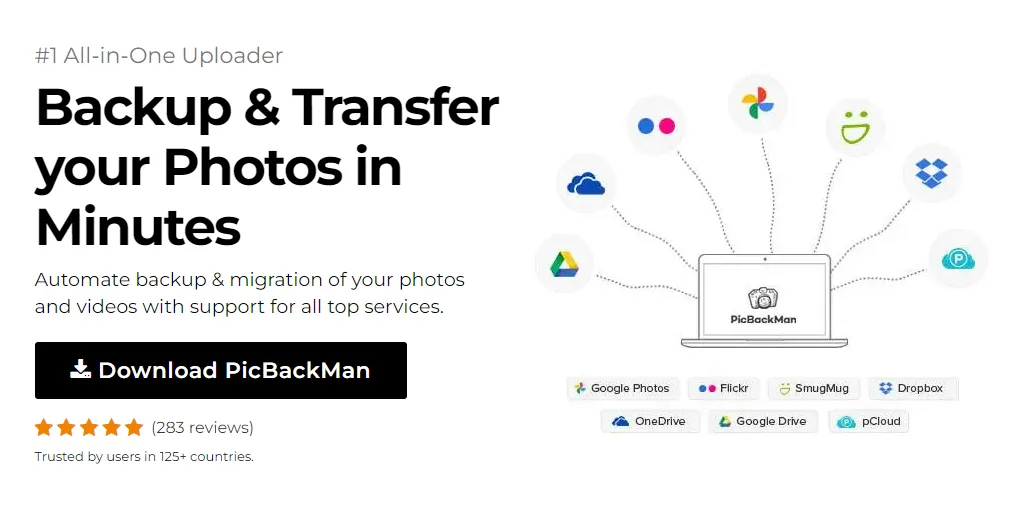
Simply download PicBackMan (it's free!), register your account, connect to your online store and tell PicBackMan where your videos are - PicBackMan does the rest, automatically. It bulk uploads all videos and keeps looking for new ones and uploads those too. You don't have to ever touch it.
Conclusion
Transferring your Google Drive files to another account doesn't have to be complicated. By choosing the right method for your specific situation, you can move your files efficiently and securely. Whether you prefer the simplicity of sharing and ownership transfer, the comprehensiveness of Google Takeout, or the convenience of third-party tools, there's a solution that fits your needs.
Remember to plan your transfer carefully, especially for large amounts of data. Take time to organize your files beforehand, verify successful transfers, and maintain proper backups throughout the process. With these seven methods and the tips provided, you'll be able to transfer your Google Drive files with minimal stress and disruption.
Now that you have all the information you need, you can confidently begin transferring your Google Drive files to your new account!
Frequently Asked Questions
Can I transfer ownership of Google Drive files to an account outside my organization?
No, ownership transfer is only possible between accounts within the same Google Workspace organization. For transfers to external accounts, you'll need to use sharing, download/upload, or third-party tools instead.
Will transferring files using these methods affect people who have access to shared files?
It depends on the method. Ownership transfer preserves sharing settings, while download/upload methods will create new files that need to be reshared. When using the sharing method, existing collaborators will still have access, but you'll need to make copies in your new account which will require resharing.
How long does it typically take to transfer a large Google Drive account?
Transfer time varies greatly depending on the amount of data, method used, and your internet connection. Small transfers may take minutes, while large accounts (100GB+) could take several days. Cloud-to-cloud transfers are generally faster than download/upload methods.
Do I lose file version history when transferring Google Drive files?
With ownership transfer, version history is preserved. However, if you download and re-upload files or make copies, version history will be lost. If version history is critical, ownership transfer is your best option for Google's native formats.
Can I transfer my paid Google Drive storage to my new account?
No, Google One subscriptions and storage quotas cannot be transferred between accounts. You'll need to purchase a storage plan for your new account separately if needed. Consider this when planning your transfer to ensure your new account has sufficient storage space.