![[Solved] How to Connect to Dropbox via FTP Server](https://www.picbackman.com/images/tips-tricks-img/solved-how-to-connect-to-dropbox-via-ftp-server.webp)
Menu


Start Free $129 Lifetime
Why is it the #1 bulk uploader?
- Insanely fast!
- Maintains folder structure.
- 100% automated upload.
- Supports RAW files.
- Privacy default.
How can you get started?
Download PicBackMan and start free, then upgrade to annual or lifetime plan as per your needs. Join 100,000+ users who trust PicBackMan for keeping their precious memories safe in multiple online accounts.
Trusted by users in 125+ countries.
“Your pictures are scattered. PicBackMan helps you bring order to your digital memories.”

[Solved] How to Connect to Dropbox via FTP Server

Connecting Dropbox to an FTP server can significantly streamline your file management workflow. While Dropbox doesn't natively support FTP connections, there are several workarounds that make this integration possible. In this guide, I'll walk you through exactly how to connect to Dropbox via FTP server using different methods and tools.
Whether you're a web developer needing to transfer files between platforms, a business owner managing multiple storage solutions, or simply someone looking to create a more efficient file management system, this guide will help you bridge the gap between Dropbox and FTP.
Why Connect Dropbox to an FTP Server?
Before diving into the how-to steps, let's quickly look at why you might want to connect these two different storage systems:
- Access Dropbox files through FTP clients you're already familiar with
- Automate file transfers between Dropbox and websites or applications
- Create backups of your FTP server content to Dropbox
- Manage files across different platforms from a single interface
- Share large files with clients or team members who prefer FTP
Understanding the Challenge
The main challenge is that Dropbox doesn't provide native FTP access. Dropbox uses its own API for file transfers, while FTP (File Transfer Protocol) is a completely different protocol for transferring files between computers on a network.
To solve this problem, we need to use third-party tools or services that act as a bridge between Dropbox and FTP. I'll cover several approaches, from the simplest to more advanced options.
Method 1: Using NetDrive to Connect Dropbox as an FTP Server
NetDrive is a powerful tool that can mount various cloud storage services (including Dropbox) as virtual drives on your computer. Once mounted, you can use an FTP client to access these virtual drives.
Step-by-Step Instructions:
- Download and install NetDrive from their official website
- Launch NetDrive and create a new drive
- Select Dropbox as the storage type
- Log in to your Dropbox account when prompted
- Configure drive settings (drive letter, reconnect options, etc.)
- Click "Connect" to mount your Dropbox account as a virtual drive
- Now open your preferred FTP client
- Set up a new FTP connection with the following details:
- Host: localhost
- Username: (leave as is or create one in NetDrive settings)
- Password: (your created password)
- Port: 21 (default FTP port)
- Connect and you should now have FTP access to your Dropbox files
Method 2: Using CloudMounter for Mac and Windows
CloudMounter is another excellent tool for connecting cloud storage to your computer as if it were a local drive, which you can then access via FTP.
Step-by-Step Guide:
- Download and install CloudMounter from Eltima Software's website
- Launch the application
- Click on the "+" button to add a new connection
- Select Dropbox from the list of available services
- Log in to your Dropbox account
- Once connected, your Dropbox will appear as a mounted drive
- Now install an FTP server application on your computer (like FileZilla Server)
- Configure the FTP server to use the mounted Dropbox folder as its root directory
- Set up user credentials for FTP access
- Start the FTP server
- Now you can connect to your Dropbox via any FTP client using the FTP server you just configured
Method 3: Using ExpanDrive
ExpanDrive is a robust solution that works on both Windows and Mac, allowing you to map cloud storage as local drives.
Here's how to set it up:
- Download and install ExpanDrive
- Open the application and click "Add Drive"
- Select Dropbox from the list of services
- Sign in to your Dropbox account
- Configure your drive settings (name, drive letter, etc.)
- Click "Connect" to mount Dropbox as a local drive
- Install an FTP server software like Filezilla Server or Serv-U
- Configure the FTP server to use your mounted Dropbox drive as the home directory
- Set up user credentials for the FTP server
- Start the FTP server
- You can now connect to your Dropbox through any FTP client
Method 4: Using Rclone (Advanced Users)
Rclone is a command-line program that can sync files between cloud storage and local storage. It's more technical but offers great flexibility.
Step-by-Step Instructions:
- Download and install Rclone from their official website
- Open a terminal or command prompt
- Run
rclone configto set up a new remote - Follow the prompts to create a new Dropbox remote:
- Name: dropbox (or any name you prefer)
- Storage type: Select Dropbox
- Follow the authentication process
- Once configured, you can mount your Dropbox as a local filesystem:
- For Windows:
rclone mount dropbox:/ X: --vfs-cache-mode writes - For Mac/Linux:
rclone mount dropbox:/ /mnt/dropbox --vfs-cache-mode writes
- For Windows:
- Install an FTP server that points to this mounted location
- Configure the FTP server with appropriate user credentials
- Start the FTP server
- Connect to your Dropbox via FTP using the configured credentials
Method 5: Using MultCloud as a Cloud Transfer Service
MultCloud is a web-based service that allows you to manage multiple cloud storage accounts from one interface and transfer files between them.
Here's how to use it:
- Sign up for a MultCloud account
- Add your Dropbox account to MultCloud
- Add your FTP server to MultCloud:
- Click "Add Cloud"
- Select "FTP" from the list
- Enter your FTP server details (server address, username, password, port)
- Once both are added, you can transfer files between Dropbox and your FTP server:
- Use the "Cloud Transfer" feature to move files from FTP to Dropbox or vice versa
- Set up scheduled transfers if needed
Method 6: Using Dropbox API with FTP Server Software
For developers or those comfortable with coding, using the Dropbox API with custom scripts can create a more tailored solution.
Basic Implementation Steps:
- Register a new app in the Dropbox Developer Console
- Get your API key and secret
- Install an FTP server software (like pyftpdlib for Python)
- Create a script that:
- Authenticates with Dropbox using your API credentials
- Handles FTP commands and translates them to Dropbox API calls
- Maps FTP operations to equivalent Dropbox operations
- Run your custom FTP server pointing to your Dropbox
- Connect using any FTP client
Method 7: Using Air Explorer
Air Explorer is a file manager for cloud storage services that can also set up connections between different services.
Step-by-Step Guide:
- Download and install Air Explorer
- Open the application and click "Add account"
- Select Dropbox from the list and authenticate
- Click "Add account" again and select "FTP"
- Enter your FTP server details
- Once both accounts are added, you can easily transfer files between them:
- Drag and drop files between the two services
- Use the "Synchronize" feature to keep folders in sync
Method 8: Using WebDrive
WebDrive is a commercial solution that can map cloud storage as local drives on your computer.
Here's how to set it up:
- Download and install WebDrive
- Launch the application
- Click "Add Site" and select Dropbox
- Enter your Dropbox credentials and authenticate
- Configure the drive settings (drive letter, caching options, etc.)
- Connect to mount your Dropbox as a local drive
- Install an FTP server software
- Configure the FTP server to use the WebDrive mounted folder as its root directory
- Set up user credentials for FTP access
- Start the FTP server
- Connect to your Dropbox via any FTP client using the FTP server you just configured
Quick Tip to ensure your videos never go missing
Videos are precious memories and all of us never want to lose them to hard disk crashes or missing drives. PicBackMan is the easiest and simplest way to keep your videos safely backed up in one or more online accounts.
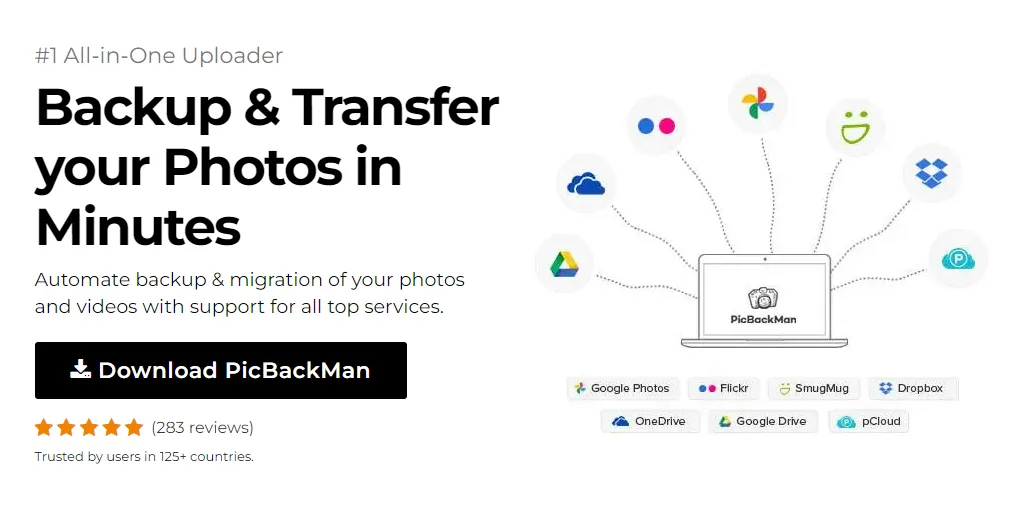
Simply download PicBackMan (it's free!) , register your account, connect to your online store and tell PicBackMan where your videos are - PicBackMan does the rest, automatically. It bulk uploads all videos and keeps looking for new ones and uploads those too. You don't have to ever touch it.
Comparing Different Methods
| Method | Ease of Use | Speed | Cost | Best For |
|---|---|---|---|---|
| NetDrive | Medium | Fast | Paid (free trial available) | Regular users who need reliable connection |
| CloudMounter | Easy | Fast | Paid (free trial available) | Mac and Windows users wanting simplicity |
| ExpanDrive | Easy | Fast | Paid (free trial available) | Users needing robust features |
| Rclone | Difficult | Very Fast | Free | Technical users and developers |
| MultCloud | Easy | Medium | Free (premium options) | Non-technical users needing simple transfers |
| Custom API Solution | Very Difficult | Customizable | Free (development time) | Developers needing custom integration |
| Air Explorer | Medium | Medium | Free (pro version available) | Users who need to manage multiple cloud services |
| WebDrive | Easy | Fast | Paid (free trial available) | Business users need reliable connection |
Troubleshooting Common Issues
Connection Problems
If you're having trouble connecting to your Dropbox via FTP:
- Check that your FTP server is running and properly configured
- Verify that your Dropbox account is properly authenticated
- Ensure that your firewall isn't blocking the FTP port (usually port 21)
- Try using passive FTP mode if you're behind a router
- Check if your Dropbox quota isn't full
File Transfer Issues
If files aren't transferring properly:
- Check if you have write permissions for the Dropbox folder
- Ensure that your internet connection is stable
- Try transferring smaller files first to identify if size is the issue
- Check if the files you're transferring contain special characters in their names
- Verify that you're not exceeding Dropbox's file size limits
Performance Issues
If the connection is slow:
- Check your internet connection speed
- Try using a wired connection instead of Wi-Fi
- Adjust buffer sizes in your FTP client if possible
- Consider using a different method if the current one is consistently slow
- Close other applications that might be using your network bandwidth
Best Practices for Using Dropbox with FTP
Security Considerations
When setting up an FTP connection to Dropbox:
- Use FTPS (FTP Secure) or SFTP (SSH File Transfer Protocol) when possible for encrypted transfers
- Strong Create passwords for your FTP server
- Limit access to only necessary folders
- Regularly review connected apps and revoke access for those you no longer use
- Consider setting up two-factor authentication for your Dropbox account
Performance Optimization
To get the best performance:
- Schedule large transfers during off-peak hours
- Use selective sync to only download the files you need
- Regularly clean up your Dropbox to remove unnecessary files
- Consider compressing files before transferring them
- Use delta sync tools when available to only transfer changed portions of files
Backup Considerations
To ensure data safety:
- Regularly back up important files to multiple locations
- Test your backup and restore process periodically
- Keep version history enabled in Dropbox
- Document your setup process for future reference
- Consider using automated scripts to verify successful transfers
Advanced Tips for Power Users
Automating File Transfers
For regular transfers between Dropbox and FTP:
- Set up scheduled tasks or cron jobs to run transfer scripts
- Use tools like WinSCP with scripting for automated transfers
- Consider services like Zapier or IFTTT to trigger transfers based on events
- Create log files to track transfer activities
- Set up email notifications for successful or failed transfers
Working with Large Files
When dealing with very large files:
- Split large files into smaller chunks before transferring
- Use tools that support resumable transfers
- Consider using a dedicated tool like Rclone that handles large files well
- Transfer during periods of low network usage
- Monitor transfer progress to catch and address any issues early
Integration with Workflows
To incorporate this setup into your existing workflows:
- Create batch files or shell scripts to automate common tasks
- Set up webhooks to trigger actions when files change
- Use file naming conventions to organize content across platforms
- Consider using symbolic links to maintain consistent folder structures
- Document your process for team members or future reference
Conclusion
Connecting Dropbox to an FTP server might seem challenging at first, but with the right tools and approach, it's definitely achievable. Whether you choose a simple solution like MultCloud for occasional transfers or set up a more permanent connection using NetDrive or a custom API integration, you now have all the information you need to bridge these two file storage systems.
Remember that each method has its own advantages and limitations, so choose the one that best fits your specific needs, technical comfort level, and budget. With the right setup, you'll enjoy the benefits of both Dropbox's accessibility and the familiarity of FTP in your file management workflow.
Have you tried connecting Dropbox to FTP before? Which method worked best for you? Feel free to share your experiences and any additional tips you might have discovered along the way.
Frequently Asked Questions
1. Does Dropbox have built-in FTP functionality?
No, Dropbox doesn't have native FTP functionality. It uses its own API for file transfers. That's why we need to use third-party tools or services to create a bridge between Dropbox and FTP protocols.
2. Are there any completely free solutions for connecting Dropbox to FTP?
Yes, there are free options like Rclone (command-line tool) and some basic features in MultCloud. However, free solutions typically have limitations in terms of transfer volume, speed, or features. For regular or professional use, paid solutions often provide better reliability and support.
3. Will these methods work with Dropbox Business accounts?
Yes, most of these methods work with both personal and business Dropbox accounts. However, if your Dropbox Business account has additional security policies set by your administrator (like IP restrictions or app approvals), you might need to get those permissions first.
4. How secure is it to connect Dropbox to an FTP server?
The security depends largely on the method you choose and how you configure it. Standard FTP is not encrypted, so it's best to use FTPS or SFTP when possible. Also, be careful about storing credentials and consider using app-specific passwords when available. For sensitive data, consult with an IT security professional about your specific setup.
5. Can I set up bidirectional sync between my FTP server and Dropbox?
Yes, several of the tools mentioned (like NetDrive, ExpanDrive, and Rclone) can be configured for bidirectional sync. This means changes made in either location can be reflected in the other. However, you should be careful with bidirectional sync to avoid conflicts, especially if multiple people are working with the files. It's often safer to designate one location as the primary source and the other as the backup.