Menu


Start Free $129 Lifetime
Why is it the #1 bulk uploader?
- Insanely fast!
- Maintains folder structure.
- 100% automated upload.
- Supports RAW files.
- Privacy default.
How can you get started?
Download PicBackMan and start free, then upgrade to annual or lifetime plan as per your needs. Join 100,000+ users who trust PicBackMan for keeping their precious memories safe in multiple online accounts.
Trusted by users in 125+ countries.
“Your pictures are scattered. PicBackMan helps you bring order to your digital memories.”

How to Sync Google Photos to iPhone/iCloud Automatically

Keeping your precious photos backed up across different platforms is essential in today's digital world. If you're an iPhone user who prefers Google Photos for storage but wants to make sure your images are also saved to your iPhone or iCloud, you're in the right place. This guide will walk you through exactly how to sync Google Photos to your iPhone and iCloud automatically, ensuring your memories are safely stored in multiple locations.
Why Sync Google Photos to iPhone or iCloud?
Before diving into the how-to steps, let's quickly look at why you might want to set up this sync:
- Create multiple backups of your precious photos
- Access your Google Photos library directly from your iPhone's Photos app
- Maintain photo organization across different platforms
- Ensure seamless access to your photos even if one service is temporarily unavailable
- Prepare for switching between services in the future
Methods to Sync Google Photos to iPhone/iCloud
There are several approaches to getting your Google Photos synced with your iPhone and iCloud. Let's explore each method in detail.
Method 1: Using the Google Photos App's Backup Settings
The Google Photos app has built-in settings that allow you to back up photos from your iPhone to Google Photos. This is the first step in creating a connection between the two services.
Step-by-Step Instructions:
- Download and install the Google Photos app from the App Store if you haven't already
- Open the Google Photos app and sign in with your Google account
- Tap on your profile picture in the top right corner
- Select "Photos settings"
- Tap on "Back up & sync"
- Toggle on "Back up & sync"
With this setting activated, new photos you take on your iPhone will automatically upload to Google Photos. However, this doesn't automatically sync photos from Google Photos back to your iPhone's Photos app or iCloud. For that, we need additional steps.
Method 2: Using the Google Photos App to Download to iPhone
To get photos from Google Photos onto your iPhone (which can then sync to iCloud if you have iCloud Photos enabled), you can use the download feature.
For individual photos:
- Open the Google Photos app on your iPhone
- Select the photo you want to save to your iPhone
- Tap the three-dot menu in the top-right corner
- Select "Save to device"
For Multiple Photos:
- Open the Google Photos app
- Long-press on a photo to activate selection mode
- Tap additional photos you want to save
- Tap the three-dot menu at the top-right
- Select "Save to device"
This method works well for selected photos but is not practical for keeping your entire library synced automatically.
Method 3: Setting Up Automatic Download with Google Photos
Unfortunately, Google Photos doesn't offer a native feature to automatically download all photos to your iPhone. However, we can set up a workflow that helps manage this process more efficiently.
Using Google Takeout for Bulk Downloads:
- Go to Google Takeout in a web browser
- Sign in with your Google account
- Deselect all services except Google Photos
- Click "Next step"
- Choose your export frequency (one-time or every 2 months)
- Select export file type and size
- Click "Create export"
- Once ready, download the export to your computer
- Transfer the photos to your iPhone via AirDrop, iTunes, or iCloud Drive
While this method isn't fully automatic, setting up recurring exports can help keep your libraries somewhat in sync with minimal effort.
Method 4: Using iCloud Photos with Google Photos
If your goal is to have photos accessible in both services, you can use iCloud Photos as the intermediary:
- On your iPhone, go to Settings
- Tap your name at the top
- Select "iCloud"
- Tap "Photos"
- Enable "iCloud Photos"
With iCloud Photos enabled, photos taken on your iPhone will upload to iCloud. Then:
- Make sure the Google Photos app is installed
- Open Google Photos and confirm "Back up & sync" is enabled
- Google Photos will detect and upload new photos from your Camera Roll to Google Photos
This creates a one-way flow: iPhone → iCloud → Google Photos. However, photos already in Google Photos won't automatically download to your iPhone.
Setting Up Automated Workflows for Two-Way Sync
For a more automated solution to sync Google Photos to iPhone/iCloud, we can use third-party automation tools.
Using Shortcuts Automation
iOS Shortcuts can help create semi-automated workflows:
- Open the Shortcuts app on your iPhone
- Tap the “Automation” tab at the bottom
- Tap the "+" button in the top-right corner
- Select "Create Personal Automation"
- Choose a trigger (like “Time of Day” to run daily)
- Tap "Next" and add the "Open App" action
- Select "Google Photos" as the app
- Tap "Next" and toggle off "Ask Before Running"
- Tap "Done"
This automation will open Google Photos regularly, which can help with background syncing. However, it doesn't directly download photos to your iPhone.
Using IFTTT for Cloud-Based Automation
IFTTT (If This Then That) can create connections between cloud services:
- Sign up for an IFTTT account at ifttt.com
- Create a new Applet by clicking "Create"
- For the trigger (“If This”), select Google Photos
- Choose a trigger like "Any new photo" or "New photo in album"
- For the action (“Then That”), options are limited, but you can connect to other services like Dropbox
- Complete the setup and activate the Applet
While IFTTT doesn't directly connect Google Photos to iCloud, you can use intermediate services like Dropbox, which can then be accessed on your iPhone.
Using Third-Party Apps for Google Photos to iPhone Sync
Several third-party apps can help bridge the gap between Google Photos and your iPhone:
PhotoSync App
PhotoSync is a powerful tool for transferring photos between devices and services:
- Download PhotoSync from the App Store
- Set up accounts for both Google Photos and iCloud
- Configure automatic sync settings in the app
- Set up background sync to run periodically
PhotoSync offers more flexibility than native solutions, allowing for scheduled syncs and specific folder targeting.
Documents by Readdle
This file management app can help transfer photos between cloud services:
- Download Documents by Readdle from the App Store
- Connect your Google account in the app
- Browse your Google Photos
- Select photos and download them to your iPhone
- Save the photos to your Camera Roll, which will sync to iCloud if enabled
Comparing Different Sync Methods
| Method | Automation Level | Ease of Setup | Limitations |
|---|---|---|---|
| Google Photos App Backup | High (iPhone to Google) | Easy | One-way sync only (iPhone to Google) |
| Manual Download | None | Easy | Time-consuming, requires manual selection |
| Google Takeout | Low | Medium | Batch process, not real-time |
| iCloud Photos + Google Photos | Medium | Easy | One-way sync, requires iCloud storage |
| Shortcuts Automation | Medium | Medium | Limited functionality, requires manual setup |
| IFTTT | Medium | Medium | Limited direct integration with iCloud |
| Third-Party Apps (PhotoSync) | High | Medium | May require subscription, extra app to manage |
Quick Tip to ensure your videos never go missing
Videos are precious memories and all of us never want to lose them to hard disk crashes or missing drives. PicBackMan is the easiest and simplest way to keep your videos safely backed up in one or more online accounts.
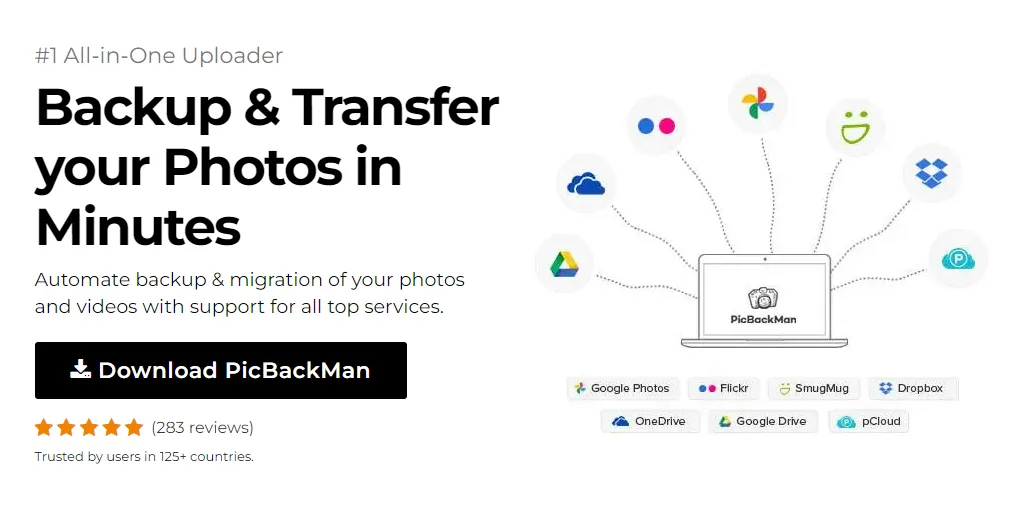
Simply download PicBackMan (it's free!) , register your account, connect to your online store and tell PicBackMan where your videos are - PicBackMan does the rest, automatically. It bulk uploads all videos and keeps looking for new ones and uploads those too. You don't have to ever touch it.
Troubleshooting Common Sync Issues
Even with the right setup, you might encounter some challenges when syncing Google Photos to your iPhone or iCloud:
Photos Not Appearing on iPhone After Download
If you've downloaded photos from Google Photos but they're not showing up in your iPhone's Photos app:
- Check if you've granted Google Photos permission to access your Photos library (Settings > Google Photos > Photos)
- Restart the Photos app or your iPhone
- Make sure you have enough storage space on your iPhone
- Check if the photos are appearing in the “Recently Added” album rather than your main library
Sync Taking Too Long
If the sync process seems to be taking forever:
- Check your internet connection - use Wi-Fi for faster transfers
- Reduce the batch size if you're transferring many photos at once
- Close other apps that might be using network bandwidth
- Make sure your iPhone is not in low power mode
- Check if Google Photos is allowed to use cellular data if you're not on Wi-Fi (Settings > Google Photos > Cellular Data)
Storage Space Issues
Syncing large photo libraries can quickly fill up storage:
- Check your available iPhone storage (Settings > General > iPhone Storage)
- Consider upgrading your iCloud storage plan if needed
- Use Google Photos' "Free up space" feature to remove photos from your device that are already backed up
- Be selective about which photos you sync if storage is limited
Photo Quality Concerns
Sometimes photos may appear in lower quality after syncing:
- Check Google Photos upload quality settings (High quality vs. Original quality)
- Verify iCloud Photos settings aren't set to "Optimize iPhone Storage"
- For important photos, consider using the “Save original” option when downloading
Managing Privacy and Security When Syncing Photos
When setting up photo syncing between services, keep these privacy considerations in mind:
- Both Google Photos and iCloud have different privacy policies - review them to understand how your photos are stored and used
- Use strong, unique passwords for both your Google and Apple accounts
- Enable two-factor authentication on both accounts for extra security
- Be cautious about third-party apps - only use reputable services with clear privacy policies
- Consider which photos you want to sync - you might prefer to keep some photos private on just one service
- Regularly review app permissions to ensure they only have access to what they need
Optimizing Your Photo Management Workflow
Once you've set up syncing between Google Photos and your iPhone/iCloud, consider these tips to optimize your photo management:
Organizing Photos Effectively
- Use consistent album structures across both platforms
- Take advantage of Google Photos' search capabilities to find photos by content
- Create shared albums for family photos that everyone can access
- Use descriptive album names that will make sense on both platforms
- Consider using the “Favorites” feature on both platforms for your most important photos
Saving Storage Space
- Regularly clean up screenshots, duplicate photos, and blurry images
- Consider using Google Photos' "Storage saver" quality for less important photos
- Enable iCloud Photos' "Optimize iPhone Storage" option if iPhone space is limited
- Delete photos from one platform if you're certain they're safely backed up on the other
Creating a Backup Schedule
Even with automatic syncing, it's good to have a regular check-in schedule:
- Set a monthly reminder to verify that syncing is working correctly
- Periodically check both Google Photos and iCloud to ensure all important photos appear in both places
- After important events, manually verify that new photos have synced correctly
Conclusion
Syncing Google Photos to your iPhone and iCloud doesn't have to be complicated. While there's no single "perfect" solution that provides completely automatic two-way syncing, the methods outlined in this guide offer various approaches depending on your specific needs and preferences.
For most users, the combination of enabling iCloud Photos on your iPhone and using Google Photos' backup feature creates a workable system where new photos are available in both places. For more specific needs, third-party apps like PhotoSync can provide additional functionality.
Remember that photo management is personal - the best system is one that fits your workflow and ensures your precious memories are safely backed up in multiple locations. By following the steps in this guide, you'll have greater peace of mind knowing your photos are securely stored and accessible across your favorite platforms.
Frequently Asked Questions
Can Google Photos automatically sync to my iPhone's Photos app?
No, Google Photos doesn't offer a native feature to automatically download photos to your iPhone's Photos app. You'll need to manually download photos or use third-party apps like PhotoSync to create a more automated workflow. Google Photos can automatically back up photos from your iPhone to Google, but not the other way around.
Will syncing Google Photos to iCloud use double the storage?
Yes, if you store photos in both Google Photos and iCloud, they will count towards your storage limits on both services. If storage space is a concern, consider using Google Photos' "Storage saver" quality option, which provides unlimited storage for slightly compressed photos, and only keeping your most important photos in full quality on iCloud.
How often should I check that my photos are syncing correctly?
It's a good idea to verify your sync is working properly at least once a month. After important events like vacations or celebrations, take a few minutes to confirm your new photos have properly synced to both services. Setting a regular calendar reminder can help make this a habit.
What happens if I delete a photo from Google Photos that I've synced to my iPhone?
Deleting a photo from Google Photos will not automatically delete it from your iPhone or iCloud. Likewise, if you delete a photo from your iPhone that has been backed up to Google Photos, it will remain in Google Photos unless you specifically delete it there as well. This separation can be helpful as a safety feature but requires managing deletions on both platforms if you want to completely remove a photo.
Is it better to use Google Photos or iCloud Photos as my primary photo storage?
Both services have their strengths. Google Photos excels at search capabilities, AI features, and cross-platform availability. iCloud Photos offers seamless integration with Apple devices and preserves Live Photos and other Apple-specific formats perfectly. Many users find that using both provides the best of both worlds - Google Photos for its excellent search and sharing features, and iCloud for its deep integration with the Apple ecosystem.