Menu


Start Free $129 Lifetime
Why is it the #1 bulk uploader?
- Insanely fast!
- Maintains folder structure.
- 100% automated upload.
- Supports RAW files.
- Privacy default.
How can you get started?
Download PicBackMan and start free, then upgrade to annual or lifetime plan as per your needs. Join 100,000+ users who trust PicBackMan for keeping their precious memories safe in multiple online accounts.
Trusted by users in 125+ countries.
“Your pictures are scattered. PicBackMan helps you bring order to your digital memories.”

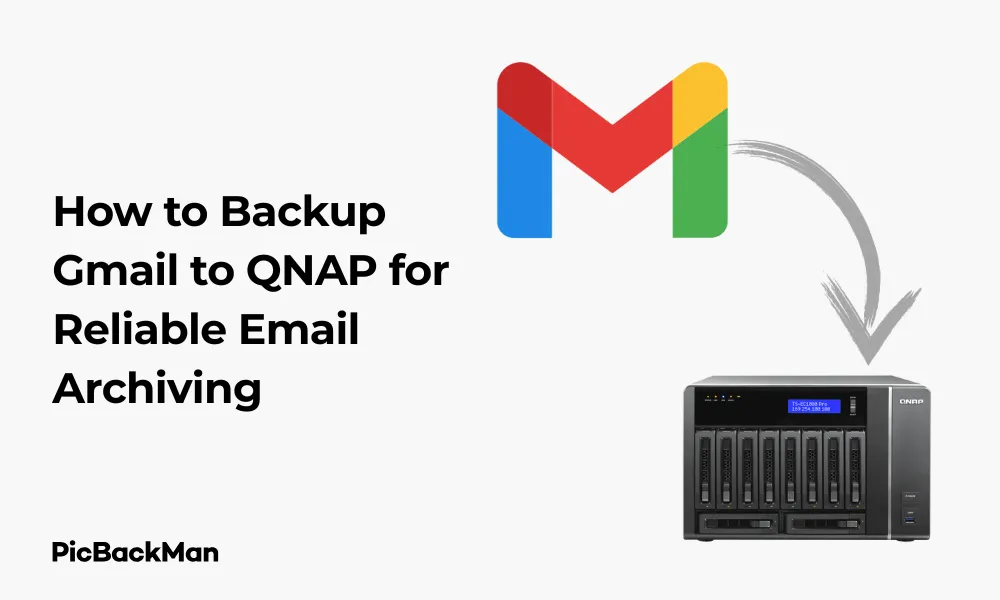
How to Backup Gmail to QNAP for Reliable Email Archiving

Losing access to your important emails can be a nightmare. Whether you're a business professional with critical communications or an individual with personal correspondence you want to preserve, backing up your Gmail account is essential. QNAP NAS (Network Attached Storage) systems offer a practical solution for creating reliable Gmail backups that you can access anytime, even without an internet connection.
In this guide, I'll walk you through the entire process of backing up your Gmail account to a QNAP device. You'll learn multiple methods, troubleshooting tips, and best practices to ensure your email data remains safe and accessible.
Why You Should Backup Your Gmail Account
Despite Google's reliable infrastructure, there are several compelling reasons to maintain a local backup of your Gmail:
- Protection against account lockouts or security breaches
- Access to emails during internet outages
- Safeguard against accidental deletion of important messages
- Compliance with data retention policies for businesses
- Peace of mind knowing your data exists in multiple locations
Understanding QNAP as a Backup Solution
QNAP systems are ideal for email backups because they provide:
- Large storage capacity for thousands of emails and attachments
- Local network access to your data
- Built-in redundancy options (RAID configurations)
- Multiple backup applications and methods
- Secure, encrypted storage options
Prerequisites for Gmail to QNAP Backup
Before you begin the backup process, make sure you have:
- A QNAP NAS device set up and running on your network
- QTS operating system updated to the latest version
- Sufficient storage space on your QNAP
- Your Gmail account credentials
- Network connectivity between your computer and QNAP device
Quick Tip to ensure your videos never go missing
Videos are precious memories and all of us never want to lose them to hard disk crashes or missing drives. PicBackMan is the easiest and simplest way to keep your videos safely backed up in one or more online accounts.
Simply download PicBackMan (it's free!) , register your account, connect to your online store and tell PicBackMan where your videos are - PicBackMan does the rest, automatically. It bulk uploads all videos and keeps looking for new ones and uploads those too. You don't have to ever touch it.
Method 1: Using QNAP HBS 3 Hybrid Backup Sync
HBS 3 is QNAP's comprehensive backup solution that can connect to various cloud services, including Google Workspace.
Step-by-Step Process
1. Install HBS 3 on Your QNAP
If you don't already have HBS 3 installed:
- Open the App Center on your QNAP
- Search for "HBS 3" or "Hybrid Backup Sync"
- Click "Install"
- Wait for the installation to complete
2. Configure Google Workspace Connection
- Launch HBS 3 from your QNAP dashboard
- Click on "Backup & Restore"
- Select "Create Job" → "Google Workspace Backup"
3. Authenticate Your Google Account
- Click "Add Account" and follow the Google authentication process
- Grant the necessary permissions when prompted
- Verify that your account appears in the list of available accounts
4. Configure Backup Settings
- Select "Gmail" from the service options
- Choose which email folders to back up (Inbox, Sent, Drafts, etc.)
- Set a destination folder on your QNAP where emails will be stored
- Configure backup schedule (daily, weekly, or custom)
- Enable versioning if you want to keep multiple backup versions
5. Start the Backup Process
- Review your settings one final time
- Click "Create" to save your backup job
- Select “Run Now” to start the initial backup immediately
6. Monitor the Backup Progress
- The initial backup may take several hours depending on the size of your Gmail account
- You can view the progress in the HBS 3 dashboard
- Check the logs for any errors or warnings
Method 2: Using QNAP MailPlus Server
Another approach is using QNAP's MailPlus Server, which can pull emails from your Gmail account via IMAP.
Step-by-Step Process
1. Install MailPlus Server
- Open the App Center on your QNAP
- Search for "MailPlus Server"
- Click "Install" and follow the installation wizard
2. Configure MailPlus Server
- Launch MailPlus Server from the QNAP dashboard
- Complete the initial setup wizard
- Create an administrator account
- Configure the basic mail server settings
3. Set Up IMAP Migration
- Navigate to "Account" → "Migration"
- Select "IMAP Migration"
- Click "Create Migration Task"
4. Configure Gmail Connection
- Enter the Gmail IMAP server: imap.gmail.com (Port 993)
- Enter your Gmail email address and password
- Select SSL/TLS encryption
5. Configure Migration Settings
- Select which email folders to migrate
- Choose destination folders on the MailPlus Server
- Set migration schedule (one-time or recurring)
6. Start and Monitor Migration
- Click "Apply" to save your migration task
- Start the migration process
- Monitor progress in the migration dashboard
Method 3: Using Third-Party Email Backup Tools with QNAP
You can also use third-party tools to back up Gmail and store the results on your QNAP.
Option 1: Using MailStore Home with QNAP as Storage
1. Install MailStore Home on Your Computer
- Download MailStore Home from the official website
- Install it on your Windows computer
- Launch the application
2. Connect MailStore to Your Gmail Account
- Click on "Archive Email"
- Select "Gmail" from the list of email services
- Enter your Gmail credentials and authenticate
3. Configure Backup Settings
- Select which folders to archive
- Choose archiving options (include attachments, etc.)
- Set up a schedule for regular backups
4. Configure Storage Location on QNAP
- Map your QNAP shared folder as a network drive on your computer
- In MailStore, go to “Settings” → “Storage Locations”
- Change the archive location to the mapped QNAP drive
5. Run the Backup Process
- Start the archiving process
- Monitor progress and check for completion
- Verify that the archive is stored on your QNAP
Option 2: Using Gmail's Built-in Export Tool with QNAP Storage
1. Export Your Gmail Data
- Visit Google Takeout (takeout.google.com)
- Deselect all services except Gmail
- Configure export settings (file format, size, etc.)
- Click "Create Export"
2. Download the Export File
- Wait for Google to prepare your export (you'll receive an email)
- Download the ZIP file containing your Gmail data
3. Transfer to QNAP
- Connect to your QNAP via File Explorer or File Station
- Create a dedicated folder for Gmail backups
- Upload or copy the downloaded ZIP file to this folder
Setting Up Automated Recurring Backups
To ensure your Gmail backup remains current, set up automated recurring backups:
Using HBS 3 Scheduling
- Open your existing HBS 3 Gmail backup job
- Click "Edit"
- Navigate to the "Schedule" tab
- Set up a recurring schedule (daily, weekly, or custom)
- Specify the time when backups should run (ideally during off-hours)
- Save your changes
Using QNAP Task Scheduler with External Tools
- Open "Control Panel" on your QNAP
- Navigate to "System" → "Task Scheduler"
- Click "Create" → "Scheduled Task" → "User Defined Script"
- Set your schedule parameters
- Write a script that triggers your backup method
- Save and enable the task
Verifying Your Gmail Backups
Regularly checking your backups ensures they're working correctly:
Checking Backup Integrity
- Navigate to your backup location on QNAP
- Verify that new files are being created according to your schedule
- Check log files for any errors or warnings
- Confirm file sizes are appropriate (growing over time)
Test Restoring Emails
- Periodically perform a test restoration of a few emails
- Verify that content and attachments are intact
- Check that email metadata (dates, sender information) is preserved
Troubleshooting Common Issues
Authentication Problems
- Ensure you've enabled IMAP access in Gmail settings
- Check if you need to create an app password for your backup tool
- Verify that you haven't reached Google's API rate limits
- Try re-authenticating your Google account
Backup Failures
- Check network connectivity between QNAP and the internet
- Verify that your QNAP has sufficient storage space
- Review log files for specific error messages
- Ensure your QNAP firmware is up to date
Slow Backup Performance
- Consider running backups during off-peak hours
- Check if other applications are using QNAP resources
- Verify your internet connection speed
- Consider incremental backups instead of full backups after the initial one
Security Considerations for Email Backups
Protecting your backed-up email data is crucial:
Encryption Options
- Enable encryption on your QNAP storage volumes
- Use password protection for backup archives
- Consider enabling snapshot protection for backup folders
Access Control
- Create a dedicated user account for email backups with restricted permissions
- Limit network access to your QNAP device
- Enable two-factor authentication for QNAP admin access
- Regularly review access logs for suspicious activity
Comparing Gmail Backup Methods for QNAP
| Method | Ease of Setup | Automation | Features | Best For |
|---|---|---|---|---|
| HBS 3 | Medium | Excellent | Full integration, scheduling, versioning | Regular automated backups |
| MailPlus Server | Complex | Good | Full mail server functionality, migration tools | Business users need full mail server |
| Third-Party Tools | Medium | Varies | Depends on tool, often more flexible | Users with specific backup requirements |
| Google Takeout | Easy | Poor | Complete data export, manual process | One-time backups or infrequent archiving |
Best Practices for Gmail Backups on QNAP
Backup Frequency and Retention
- Set daily incremental backups for active email accounts
- Perform full backups weekly or monthly
- Keep at least three backup versions
- Consider longer retention for business-critical communications
Storage Management
- Monitor storage usage regularly
- Set up storage quotes for email backups
- Implement a backup rotation strategy for long-term storage
- Consider using QNAP's storage expansion options for growing email archives
Disaster Recovery Planning
- Document your backup configuration for quick recovery
- Test restoration procedures periodically
- Consider secondary backups to another location
- Keep backup software and QNAP firmware updated
Accessing and Restoring Backed-Up Gmail Data
Browsing Email Archives
- Use File Station to navigate to your backup location
- Most backup formats allow browsing individual emails and folders
- Some formats may require specific viewers or extraction tools
Restoring Individual Emails
- With HBS 3, use the restore function to select specific emails
- With MailPlus, use the import function to restore to your server
- For exported archives, you can manually import selected emails back to Gmail
Full Account Restoration
- For complete restoration, use the full restore option in your backup tool
- Follow prompts to select the backup version and destination
- Allow sufficient time for the restoration process to complete
Conclusion
Backing up your Gmail to a QNAP NAS provides reliable protection for your important emails and attachments. Whether you choose HBS 3, MailPlus Server, or third-party tools, you now have the knowledge to implement a robust backup strategy that ensures your email data remains safe and accessible.
Remember that the best backup is one that runs regularly without your intervention. Take time to set up automated schedules, verify your backups periodically, and keep your QNAP system updated. With these practices in place, you'll have peace of mind knowing your email communications are protected against loss or service disruptions.
By following the steps outlined in this guide, you've taken an important step toward comprehensive data protection. Your future self will thank you when you need to recover that important email that would otherwise be lost forever.
Frequently Asked Questions
1. How much storage space do I need on my QNAP for Gmail backups?
The storage requirements depend on your Gmail account size. As a general rule, allocate at least 1.5-2 times your current Gmail storage usage to accommodate growth and multiple backup versions. For example, if you're using 10GB in Gmail, plan for 15-20GB of QNAP storage for your backups.
2. Can I back up multiple Gmail accounts to my QNAP?
Yes, you can back up multiple Gmail accounts to your QNAP device. Simply create separate backup jobs for each account in HBS 3 or set up multiple migration tasks in MailPlus Server. Make sure to organize the backup destinations in separate folders for easy management.
3. Will backing up Gmail to QNAP affect my original emails?
No, backing up Gmail to your QNAP is a read-only process that doesn't modify or delete your original emails. The backup tools create copies of your emails without changing anything in your Gmail account. Your emails will remain accessible through Gmail as usual.
4. How often should I back up my Gmail to QNAP?
For personal accounts with moderate email volume, daily or weekly backups are typically sufficient. For business accounts or high-volume email users, consider daily incremental backups with weekly full backups. Adjust the frequency based on how critical your emails are and how frequently new important messages arrive.
5. Can I access my backed-up Gmail emails when my internet is down?
Yes, one of the main advantages of backing up Gmail to a QNAP NAS is local access to your emails even without internet connectivity. As long as your local network is functioning and you can connect to your QNAP device, you'll be able to browse and search through your backed-up emails during internet outages.