Menu


Start Free $129 Lifetime
Why is it the #1 bulk uploader?
- Insanely fast!
- Maintains folder structure.
- 100% automated upload.
- Supports RAW files.
- Privacy default.
How can you get started?
Download PicBackMan and start free, then upgrade to annual or lifetime plan as per your needs. Join 100,000+ users who trust PicBackMan for keeping their precious memories safe in multiple online accounts.
Trusted by users in 125+ countries.
“Your pictures are scattered. PicBackMan helps you bring order to your digital memories.”

5 FREE Ways to Backup OneDrive to External Drive

Looking to backup your OneDrive files to an external drive without spending a dime? You're in the right place! Having a physical backup of your cloud storage is simply smart planning. In this guide, I'll show you 5 completely free methods to secure your OneDrive data on an external drive.
Whether you're worried about losing access to your cloud storage, want an offline copy of important files, or just need extra peace of mind, these backup solutions will help protect your valuable data. Let's dive into these practical methods that anyone can use!
Why You Should Backup OneDrive to an External Drive
Before we get to the methods, let's quickly cover why backing up your OneDrive to an external drive makes sense:
- Offline access to your files when internet isn't available
- Protection against account lockouts or subscription issues
- Safeguard against cloud service outages
- Additional layer of security for sensitive information
- Peace of mind knowing your files exist in multiple locations
Now, let's explore the five free methods to back up your OneDrive files to an external drive.
Method 1: Manual Download and Copy to External Drive
The most straightforward approach is manually downloading your OneDrive files and copying them to your external drive. This method requires no additional software and gives you complete control over what gets backed up.
Step-by-Step Process:
1. Access Your OneDrive Account
Start by logging into your OneDrive account through a web browser or opening the OneDrive folder on your computer if you have it synced.
2. Select Files and Folders to Download
If using the web interface, select the files and folders you want to backup. You can hold Ctrl while clicking to select multiple items or use Shift to select a range.
3. Download Your Files
Once selected, click "Download" in the top menu. If you're downloading a folder or multiple files, OneDrive will compress them into a ZIP file.
4. Connect Your External Drive
Plug your external hard drive or USB drive into your computer and make sure it's recognized by your system.
5. Copy Files to External Drive
Extract the ZIP file (if applicable) and copy all downloaded files to your external drive. Consider creating a folder structure that mirrors your OneDrive organization for easier management.
Pros and Cons of Manual Backup
Pros:
- No additional software required
- Complete control over which files get backed up
- No automatic changes or syncing that could overwrite files
- Works with any external storage device
Cons:
- Time-consuming for large file collections
- Requires remembering to perform regular backups
- No automation or scheduling options
- Need to manually track which files have been updated
Method 2: Use OneDrive Desktop App with Selective Sync
The OneDrive desktop application offers a selective sync feature that allows you to choose which folders sync to your computer. By combining this with your external drive, you can create an effective backup system.
Step-by-Step Process:
1. Install and Set Up OneDrive Desktop App
If you haven't already, download and install the OneDrive desktop application from the Microsoft website. Sign in with your OneDrive account.
2. Configure Selective Sync
Right-click the OneDrive icon in your system tray, select "Settings," and go to the "Account" tab. Click "Choose folders" to select which OneDrive folders you want to sync to your computer.
3. Change OneDrive Folder Location to External Drive
Here's where the magic happens:
- Right-click the OneDrive icon in your system tray
- Select "Settings"
- Go to the "Account" tab
- Click "Unlink this PC"
- Follow the setup wizard again
- When prompted for a location, choose a folder on your external drive
4. Complete Setup and Sync
Complete the OneDrive setup process, making sure to select the folders you want to backup. OneDrive will now sync directly to your external drive instead of your computer's internal storage.
Pros and Cons of Using OneDrive Desktop App
Pros:
- Automatic syncing when external drive is connected
- Changes made in OneDrive are reflected in your backup
- No need to remember to manually back up files
- Uses built-in Microsoft tools without third-party software
Cons:
- External drive needs to be connected for syncing to occur
- Accidental deletions in OneDrive will also delete from backup
- Limited control over sync timing
- May consume bandwidth as files sync
Method 3: Use Windows File History with OneDrive
Windows has a built-in backup tool called File History that can automatically back up your files to an external drive, including your OneDrive folder if it's synced to your PC.
Step-by-Step Process:
1. Make Sure OneDrive is Syncing to Your PC
Ensure the OneDrive desktop app is installed and syncing the folders you want to back up to your computer.
2. Connect Your External Drive
Connect your external hard drive to your computer. Make sure Windows recognizes it.
3. Open File History Settings
On Windows 10/11, go to Settings > Update & Security > Backup. On older Windows versions, search for "File History" in the Control Panel.
4. Add OneDrive Folder to File History
Click "Add a drive" and select your external drive. Once File History is turned on, click "More options" to access additional settings.
5. Configure Backup Settings
By default, File History backs up your libraries, desktop, contacts, and favorites. To ensure OneDrive is included:
- Scroll down to "Back up these folders"
- Click "Add a folder"
- Navigate to and select your OneDrive folder
- Set your preferred backup frequency and retention period
6. Start the Backup
Click "Back up now" to start the initial backup process. Windows will now automatically back up your OneDrive folder according to your schedule as long as the external drive is connected.
Pros and Cons of Using Windows File History
Pros:
- Built into Windows with no additional software needed
- Automatic scheduled backups
- Keeps multiple versions of files for recovery
- Easy to restore files if needed
Cons:
- Only works on Windows computers
- External drive must be connected for backups to run
- May use significant space due to version history
- Limited customization options
Method 4: Use FreeFileSync for Customized Backups
FreeFileSync is a powerful open-source backup software that allows for more customized and controlled backups of your OneDrive files to an external drive.
Step-by-Step Process:
1. Download and Install FreeFileSync
Visit the FreeFileSync website and download the free application. Install it on your computer.
2. Create a New Sync Configuration
Open FreeFileSync and set up a new synchronization configuration:
- Click on "Browse" next to the left panel and select your local OneDrive folder
- Click on "Browse" next to the right panel and select a folder on your external drive
3. Choose Sync Settings
Configure your synchronization settings:
- Select a synchronization method (usually "Mirror" for backups)
- Set comparison settings (by default, file time and size)
- Configure filters if you want to exclude certain files
4. Run Initial Synchronization
Click "Compare" to see what will be synchronized, then click "Synchronize" to perform the initial backup.
5. Save Configuration for Future Use
Save your configuration by clicking on "Save As" in the menu. This allows you to quickly load the same settings for future backups.
6. Create a Batch Job (Optional)
For automated backups:
- Click on "Save As Batch Job" in the menu
- Save the batch file to an accessible location
- Use Windows Task Scheduler to run this batch file automatically on a schedule
Pros and Cons of Using FreeFileSync
Pros:
- Completely free and open-source
- Highly customizable backup options
- Can be automated with batch jobs and task scheduler
- Shows preview of changes before executing
- Supports various synchronization methods
Cons:
- Steeper learning curve than built-in options
- Requires manual setup of automation
- Interface may be overwhelming for beginners
- Requires installation of third-party software
Method 5: Use Rclone for Command-Line Backups
For more tech-savvy users, Rclone offers a powerful command-line solution for backing up OneDrive to an external drive. While it has a steeper learning curve, it provides exceptional flexibility and automation capabilities.
Step-by-Step Process:
1. Download and Install Rclone
Visit the Rclone website and download the appropriate version for your operating system. Follow the installation instructions provided.
2. Configure Rclone for OneDrive
Open a command prompt or terminal and run:
rclone config- Follow the prompts to create a new remote named "onedrive"
- Select "Microsoft OneDrive" as the storage type
- Follow the authentication process to link your OneDrive account
3. Test the Connection
Verify your setup by listing your OneDrive files:
rclone ls onedrive:
4. Perform a Backup
With your external drive connected, run a command like:
rclone copy onedrive: /path/to/external/drive/onedrive-backup --progress
This will copy all files from your OneDrive to the specified folder on your external drive.
5. Create a Batch File for Easy Backups
Create a text file with your rclone command, save it with a .bat extension (Windows) or as a shell script (Mac/Linux). Run this file whenever you want to perform a backup.
6. Set Up Scheduled Backups (Optional)
Use your operating system's task scheduler (Windows Task Scheduler, cron on Mac/Linux) to run your backup script automatically on a schedule.
Pros and Cons of Using Rclone
Pros:
- Extremely powerful and flexible
- Works across all major operating systems
- Very efficient with bandwidth and resources
- Can handle large file collections reliably
- Supports advanced filtering and inclusion/exclusion rules
Cons:
- Command-line interface may intimidate beginners
- Requires learning specific commands and syntax
- No graphical user interface
- Setup process is more complex than other options
Comparison of All 5 Backup Methods
| Method | Ease of Use | Automation | Customization | Best For |
|---|---|---|---|---|
| Manual Download | Very Easy | None | High | Occasional backups of specific files |
| OneDrive Desktop App | Easy | Full | Limited | Regular syncing of all OneDrive content |
| Windows File History | Easy | Full | Moderate | Windows users wanting automated versioned backups |
| FreeFileSync | Moderate | Configurable | High | Users needing specific backup rules and schedules |
| Rclone | Difficult | Configurable | Very High | Tech-savvy users with complex backup needs |
Tips for Effective OneDrive Backups
No matter which method you choose, here are some tips to make your OneDrive backups more effective:
Create a Backup Schedule
Set a regular schedule for your backups, whether they're manual or automated. Consistency is key to ensuring your backup is always up-to-date.
Organize Files Before Backing Up
Take time to organize your OneDrive files and folders before backing up. This makes it easier to find specific files later and can help reduce the size of your backups if you exclude unnecessary files.
Test Your Backups
Regularly test your backups by attempting to restore a few files. This ensures your backup process is working correctly and that you can recover files when needed.
Consider Multiple Backup Locations
For truly important files, consider using multiple backup methods or destinations. This follows the 3-2-1 backup rule: three copies of your data, on two different media types, with one copy stored off-site.
Monitor Backup Space
Keep an eye on the available space on your external drive. Set reminders to check periodically, especially if you're adding large files to your OneDrive.
Secure Your External Drive
Consider encrypting your external drive, especially if it contains sensitive information. Most operating systems offer built-in encryption tools.
Quick Tip to ensure your videos never go missing
Videos are precious memories and all of us never want to lose them to hard disk crashes or missing drives. PicBackMan is the easiest and simplest way to keep your videos safely backed up in one or more online accounts.
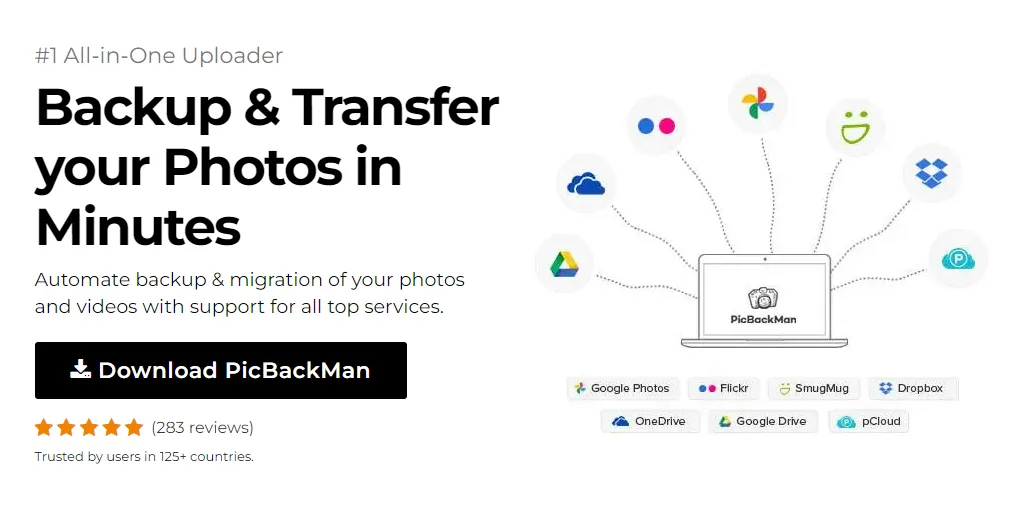
Simply download PicBackMan (it's free!), register your account, connect to your online store and tell PicBackMan where your videos are - PicBackMan does the rest, automatically. It bulk uploads all videos and keeps looking for new ones and uploads those too. You don't have to ever touch it.
Troubleshooting Common Backup Issues
Even with the best backup methods, you might encounter some issues. Here's how to address common problems:
Slow Backup Speeds
If your backups are running slowly:
- Check your internet connection if downloading from OneDrive
- Verify your external drive isn't failing (run diagnostic tools)
- Try connecting the drive to a different USB port, preferably USB 3.0 or higher
- Close resource-intensive applications while backing up
Incomplete Backups
If some files aren't being backed up:
- Check for file path length issues (Windows has a 260-character limit by default)
- Look for permission problems with specific files
- Verify exclusion settings aren't blocking certain file types
- Ensure your external drive has enough free space
Sync Conflicts
When using sync-based methods, you might encounter file conflicts:
- Review conflict notifications carefully
- Choose the newest version unless you specifically need an older one
- Consider using a backup method that preserves versions
External Drive Not Recognized
If your computer doesn't see your external drive:
- Try a different USB port
- Check if the drive appears in Disk Management (Windows) or Disk Utility (Mac)
- Test the drive on another computer
- Consider updating drive drivers or formatting if necessary
Best Practices for Managing Your OneDrive Backups
To get the most out of your OneDrive backups, follow these best practices:
Label and Date Your Backups
Create a consistent naming convention for your backup folders that includes dates. This makes it much easier to identify when a particular backup was created.
Document Your Backup Process
Keep notes on how you've set up your backup system, including any special settings or commands. This will help you recreate the setup if needed or troubleshoot issues.
Rotate Multiple Backups
If space allows, maintain several backups from different time periods rather than always overwriting the same backup. This provides more recovery options if issues aren't discovered immediately.
Verify Backup Integrity
Periodically check your backup files to ensure they haven't become corrupted. Open random files from your backup to confirm they work properly.
Stay Updated
Keep any backup software updated to ensure compatibility with the latest OneDrive features and security improvements.
Conclusion
Backing up your OneDrive to an external drive doesn't have to cost you anything. With these five free methods, you can create reliable backups that protect your important files from accidental deletion, account issues, or cloud service problems.
For casual users with smaller collections of files, the manual download method or OneDrive desktop app approach might be perfect. Windows users will find File History a convenient built-in solution, while those wanting more control can leverage FreeFileSync. Tech-savvy users will appreciate the power and flexibility of Rclone.
Remember that the best backup is one you actually use consistently. Choose the method that best fits your technical comfort level, file organization, and backup frequency needs. Then make it a habit to verify your backups periodically to ensure your data remains protected.
With your OneDrive safely backed up to an external drive, you can enjoy the convenience of cloud storage while maintaining the security of physical backups – all without spending a penny on backup software.
Frequently Asked Questions
Can I access my OneDrive backup files without internet connection?
Yes, that's one of the main benefits of backing up OneDrive to an external drive. Once your files are copied to the external drive, you can access them anytime by connecting the drive to your computer, even without internet access.
Will backing up OneDrive to an external drive count against my OneDrive storage limit?
No. Backing up to an external drive creates a separate copy of your files. This doesn't affect your OneDrive storage quota in any way. The files stored on your external drive don't count toward your cloud storage limits.
How often should I backup my OneDrive to an external drive?
The frequency depends on how often your files change and how critical they are. For personal files that change occasionally, monthly backups might be sufficient. For work files that change daily, consider weekly or even daily backups. Set a schedule based on how much data you're comfortable potentially losing if something happens before your next backup.
Can I backup someone else's shared OneDrive files to my external drive?
Yes, you can backup files that others have shared with you through OneDrive. If you can access and download the files, you can back them up. However, be aware of any confidentiality agreements or copyright restrictions that might apply to shared files before creating personal backups.
What's the difference between syncing and backing up OneDrive?
Syncing creates a mirror that reflects changes in both directions – changes made in OneDrive appear in the synced folder and vice versa. This means deletions also sync, which could remove files from both locations. A true backup creates a separate, independent copy that won't be affected by changes to the original files, providing better protection against accidental deletions or corruption.