Menu


Start Free $129 Lifetime
Why is it the #1 bulk uploader?
- Insanely fast!
- Maintains folder structure.
- 100% automated upload.
- Supports RAW files.
- Privacy default.
How can you get started?
Download PicBackMan and start free, then upgrade to annual or lifetime plan as per your needs. Join 100,000+ users who trust PicBackMan for keeping their precious memories safe in multiple online accounts.
Trusted by users in 125+ countries.
“Your pictures are scattered. PicBackMan helps you bring order to your digital memories.”

Quickest Way to Sync Flickr with Google Photos Easily

Want to bring your Flickr photos into Google Photos without the headache? You're not alone. Many photographers and casual users find themselves with collections split between these two popular photo services, looking for a simple way to merge them. In this guide, I'll walk you through the fastest methods to sync your Flickr library with Google Photos, saving you time and frustration.
Whether you're trying to consolidate your photo collection, create backups, or simply transition from Flickr to Google Photos, these straightforward techniques will help you transfer your precious memories efficiently. Let's dive into the quickest solutions that actually work in 2023.
Why Sync Flickr with Google Photos?
Before jumping into the how-to, let's quickly consider why you might want to connect these two platforms:
- Backup security (having photos in multiple locations)
- Transitioning from Flickr to Google Photos completely
- Taking advantage of Google Photos' search capabilities
- Sharing photos more easily with friends who use Google services
- Creating a unified photo library across all your devices
Method 1: Direct Download and Upload (The Manual Approach)
This method is straightforward but works best for smaller collections.
Step-by-Step Instructions:
1. Download Your Flickr Photos
First, you'll need to get your photos from Flickr onto your device:
- Log into your Flickr account
- Go to “You” in the top menu to access your photostream
- Select the photos you want to transfer (use the selection tool to choose multiple)
- Click the download icon (down arrow) at the bottom right
- Choose your preferred size option
- Save the photos to a folder on your computer
2. Upload to Google Photos
Now that you have your photos downloaded, it's time to upload them to Google Photos:
- Go to photos.google.com and sign in to your Google account
- Click the "Upload" button in the top right corner
- Select "Computer" from the dropdown menu
- Navigate to the folder where you saved your Flickr photos
- Select all the photos you want to upload
- Click "Open" to begin the upload process
This method works well if you have a few dozen or even a couple hundred photos. For larger collections, you'll want to use one of the more automated methods below.
Method 2: Using Flickr's Export Tool with Google Takeout
For larger collections, Flickr offers a built-in export tool that makes the process more manageable.
Step-by-Step Instructions:
1. Request Your Flickr Data Archive
- Log into your Flickr account
- Click on your profile icon in the top right
- Select “Settings” from the dropdown menu
- Scroll down to find "Your Flickr Data"
- Click "Request my Flickr data"
- Wait for an email confirmation (this can take hours or even days depending on your library size)
2. Download Your Flickr Archive
- Once you receive the email notification, click the link provided
- Download the ZIP file(s) containing your photos
- Extract the ZIP file(s) to a folder on your computer
3. Upload to Google Photos
- Go to photos.google.com
- Click "Upload" in the top right
- Select "Computer"
- Navigate to your extracted Flickr archive folder
- Select all photos (Ctrl+A on Windows, Command+A on Mac)
- Click "Open" to begin uploading
This method preserves more of your photo metadata and works well for larger collections, though the initial export from Flickr can take time.
Method 3: Using Third-Party Transfer Tools
Several third-party services can automate the transfer process, making it significantly easier for large collections.
Option 1: PicBackMan
PicBackMan is a dedicated photo and video migration tool that makes it easy to transfer your media from Flickr to Google Photos without manually exporting and re-uploading. It is ideal if you have a large collection of photos or videos and want an automated solution.
Step-by-Step Instructions:
- Visit PicBackMan's Flickr → Google Photos migration page
- Download and install the PicBackMan app on Windows or Mac
- Open the app and log in to your PicBackMan account
- Add your Flickr account as the source service
- Add your Google Photos account as the destination
- Select the photo and video folders you want to sync
- Click “Start Migration” to begin the transfer
PicBackMan will automatically transfer your photos and videos while maintaining album names, metadata, and original quality. It's a good option if you want to avoid manually exporting each file and uploading it to Google Photos. Note that PicBackMan focuses on media, so it doesn't transfer non-media files.
Option 2: PhotoMove
PhotoMove is another service designed specifically for photo transfers between cloud services.
Step-by-Step Instructions:
- Sign up for PhotoMove at their website
- Connect your Flickr account through their authorization process
- Connect your Google Photos account
- Select which photos or albums you want to transfer
- Start the transfer process and monitor progress
The advantage of these third-party tools is that they work in the background, requiring minimal oversight once set up. They're particularly useful for large libraries with thousands of photos.
Method 4: Using the Google Photos Desktop Uploader
Google offers a desktop application that can streamline the upload process after you've downloaded your Flickr photos.
Step-by-Step Instructions:
1. Download Your Flickr Photos First
- Follow the steps in Method 1 or Method 2 to download your Flickr photos to your computer
2. Install Google Photos Backup and Sync
- Download the Google Photos desktop application from the Google Photos Apps page
- Install the application on your computer
- Sign in with your Google account
3. Configure Backup Settings
- In the Backup and Sync settings, click "Choose folder"
- Navigate to and select the folder containing your downloaded Flickr photos
- Choose your upload quality (High quality or Original)
- Click "Start backup" to begin uploading to Google Photos
This method is particularly useful because the desktop application can run in the background, and it will automatically handle large batches of photos without requiring you to manually select them through the web interface.
Method 5: IFTTT Automation for Ongoing Sync
If you plan to continue using both Flickr and Google Photos, you can set up an automation to keep them in sync going forward.
Step-by-Step Instructions:
1. Set Up IFTTT Account
- Go to IFTTT.com and create an account or sign in
- Click "Create" to make a new applet
2. Configure the Trigger (Flickr)
- Click "Add" next to "If This"
- Search for and select "Flickr"
- Connect your Flickr account if prompted
- Choose the trigger "New public photo posted by you" (or another relevant trigger)
- Configure any trigger fields if necessary
- Click "Create trigger"
3. Configure the Action (Google Photos)
- Click "Add" next to "Then That"
- Search for and select "Google Photos"
- Connect your Google account if prompted
- Choose the action "Add photo to album"
- Configure action fields (select album, use Flickr photo URL)
- Click "Create action"
4. Review and Enable
- Review your Applet settings
- Give your applet a title like "Sync Flickr to Google Photos"
- Toggle the applet on
This method only works for new photos going forward, not your existing library. You'll need to use one of the previous methods first to sync your existing collection.
Method 6: Using Google Photos API with Python (Advanced Users)
For tech-savvy users comfortable with coding, you can create a custom script to transfer photos.
Step-by-Step Instructions:
1. Set Up API Access
- Create a project in Google Cloud Console
- Enable the Google Photos API
- Create OAuth credentials
- Set up a Flickr API key
2. Install Required Libraries
- Install Python if you don't have it
- Install the Google Photos library:
pip install google-photos-api - Install the Flickr API library:
pip install flickrapi
3. Create and Run the Script
Here's a simplified example of what your Python script might look like:
```python import flickrapi import googleapiclient.discovery from google.oauth2.credentials import Credentials import requests import io # Set up Flickr API flickr = flickrapi.FlickrAPI(FLICKR_API_KEY, FLICKR_API_SECRET, format='parsed-json') # Set up Google Photos API credentials = Credentials.from_authorized_user_info(info=CREDENTIALS_JSON) service = googleapiclient.discovery.build('photoslibrary', 'v1', credentials=credentials) # Get photos from Flickr photos = flickr.people.getPhotos(user_id='me') # For each for photo in photos['photos']['photo photo']: # Get info and URL photo_info= flickr.photos.getInfo(photo_id=photo['id']) photo_sizes = flickr.photos.getSizes(photo_id=photo['id']) original_url = [s for s in photo_sizes['sizes']['size'] if s['label'] == 'Original'][0]['source'] # Download the photo response = requests.get(original_url) photo_bytes = io.BytesIO(response.content) # Upload to Google Photos upload_token = service.mediaItems().upload(body={}).execute().get('uploadToken') service.mediaItems().batchCreate( body={ 'newMediaItems': [ { 'description': photo_info['photo']['title']['_content'], 'simpleMediaItem': { 'uploadToken': upload_token } } ] } ).execute() ```This is a simplified example. A complete script would need error handling, pagination for large collections, and proper authentication flows.
Comparing All Methods: Which Is Best For You?
| Method | Best For | Time Required | Technical Skills |
|---|---|---|---|
| Direct Download/Upload | Small collections (under 500 photos) | Medium | Low |
| Flickr Export Tool | Medium to large collections | High | Low |
| Third-Party Tools | Large collections, minimal effort | Low (mostly automated) | Low |
| Google Photos Desktop App | Large collections, reliable upload | Medium | Low |
| IFTTT Automation | Ongoing sync of new photos | Low (setup once) | Medium |
| Custom API Script | Complete control, preserving all metadata | High (development time) | High |
Common Challenges and Solutions
Problem: Upload Speed Is Too Slow
Solutions:
- Use a wired internet connection instead of Wi-Fi
- Close bandwidth-heavy applications while uploading
- Try uploading in smaller batches
- Use the Google Photos desktop application which can optimize uploads
Problem: Missing Photo Metadata
Solutions:
- Use the Flickr export tool which preserves more metadata
- Consider third-party tools that specifically mention metadata preservation
- For advanced users, custom API scripts can transfer custom metadata fields
Problem: Duplicate photos in Google Photos
Solutions:
- Google Photos has built-in duplicate detection, but it's not perfect
- Before uploading, organize Flickr downloads into clearly labeled folders
- After transfer, use Google Photos' search function to find and remove duplicates
Problem: Album Organization Lost During Transfer
Solutions:
- Download Flickr photos by album, then upload to matching Google Photos albums
- Some third-party tools can preserve album structure during transfer
- After transfer, use Google Photos' search and filter tools to recreate important albums
Tips for a Successful Transfer
Before You Begin:
- Check your Google Photos storage space - you may need to purchase more if you have a large collection
- Decide whether to upload in "High quality" (free but slightly compressed) or "Original quality" (counts against storage)
- Make sure your computer has enough free space to temporarily store downloaded Flickr photos
- Consider your internet connection speed and stability before starting large transfers
During the Transfer:
- Don't shut down your computer or let it sleep during large uploads
- If using a laptop, keep it plugged in to prevent battery issues interrupting the process
- Monitor the progress periodically to catch any errors
- For very large collections, consider breaking the process into smaller batches
After the Transfer:
- Verify that all your important photos were transferred correctly
- Check a sample of photos to ensure quality was maintained
- Recreate any important albums or organization
- Consider keeping your Flickr account active until you're certain everything transferred properly
Maintaining Both Accounts Going Forward
If you plan to keep using both Flickr and Google Photos, consider these strategies:
- Set up IFTTT automation (as described in Method 5) to automatically sync new uploads
- Decide on a primary platform for initial uploads, then sync to the secondary platform
- Use different platforms for different purposes (eg, Flickr for public sharing, Google Photos for private archives)
- Schedule regular manual syncs if you prefer not to use automation tools
Privacy Considerations When Syncing
When transferring photos between services, keep these privacy factors in mind:
- Review the privacy settings on Google Photos after transfer - photos may default to private
- Be aware that using third-party transfer services means giving them temporary access to your photos
- Check if location data is being transferred if that's important to you (or if you want to remove it)
- Consider whether comments and social interactions on Flickr are important to preserve
Quick Tip to ensure your videos never go missing
Videos are precious memories and all of us never want to lose them to hard disk crashes or missing drives. PicBackMan is the easiest and simplest way to keep your videos safely backed up in one or more online accounts.
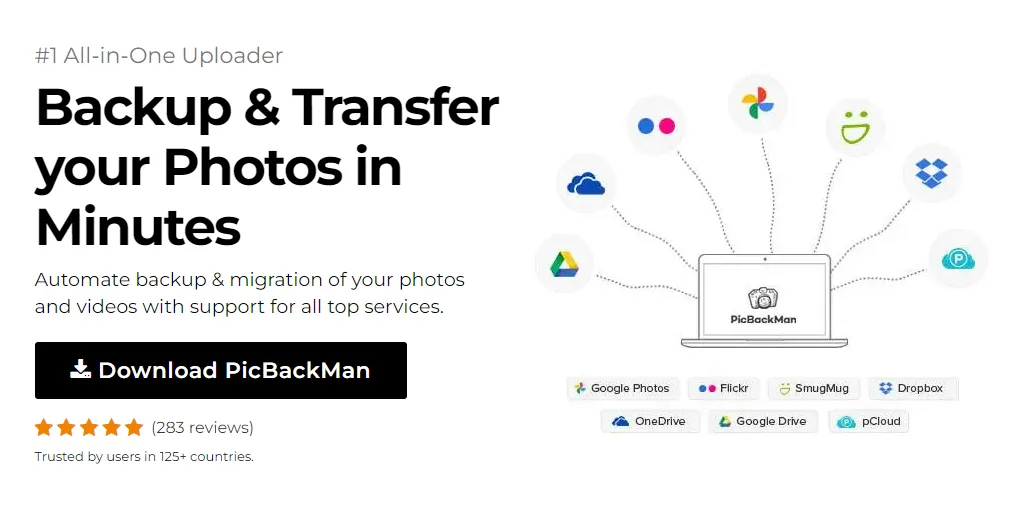
Simply download PicBackMan (it's free!) , register your account, connect to your online store and tell PicBackMan where your videos are - PicBackMan does the rest, automatically. It bulk uploads all videos and keeps looking for new ones and uploads those too. You don't have to ever touch it.
Conclusion
Syncing your Flickr photos with Google Photos doesn't have to be complicated. Whether you choose the manual approach for a small collection or an automated solution for thousands of images, the methods outlined in this guide will help you consolidate your photo library efficiently.
Remember that the best method depends on your specific needs: the size of your collection, how much metadata you want to preserve, and your comfort level with technology. For most users, third-party tools offer the best balance of simplicity and effectiveness, while tech-savvy users might prefer the control of API-based solutions.
By following these steps, you'll have your Flickr photos safely transferred to Google Photos, giving you the best of both worlds or helping you transition completely to Google's ecosystem.
Frequently Asked Questions
Will Google Photos maintain the same quality as my Flickr photos?
If you choose "Original quality" when uploading to Google Photos, your images will maintain their original resolution and quality. However, this will count against your Google storage quota. If you select "High quality" (now called "Storage saver"), Google may compress photos larger than 16MP, though the difference is often negligible for most viewing purposes.
Can I transfer my Flickr Pro features to Google Photos?
No, the platforms have different feature sets. While you can transfer the actual photos, Flickr Pro-specific features like statistics, ad-free browsing, and unlimited storage don't have direct equivalents in Google Photos. You'll need to evaluate Google One storage plans if you need more space.
Will my photo comments and social interactions transfer from Flickr?
No, social elements like comments, favorites, and group memberships don't transfer to Google Photos. These are platform-specific social features. If preserving this social context is important, you might want to maintain your Flickr account even after transferring the images.
How long will it take to transfer my entire Flickr library?
Transfer time depends on several factors: your collection size, internet connection speed, the method you choose, and current server loads. For reference, transferring 1,000 photos (averaging 5MB each) might take 2-3 hours on a decent connection using direct methods, while third-party services might complete the same transfer in the background over 1-2 hours.
Is there a limit to how many photos I can transfer at once?
Google Photos doesn't impose strict limits on batch uploads, but practical limitations exist. Browser-based uploads might struggle with more than a few hundred photos at once. The Google Photos desktop application handles thousands of photos better. Third-party services often implement their own batching to manage large transfers efficiently.