Menu


Start Free $129 Lifetime
Why is it the #1 bulk uploader?
- Insanely fast!
- Maintains folder structure.
- 100% automated upload.
- Supports RAW files.
- Privacy default.
How can you get started?
Download PicBackMan and start free, then upgrade to annual or lifetime plan as per your needs. Join 100,000+ users who trust PicBackMan for keeping their precious memories safe in multiple online accounts.
Trusted by users in 125+ countries.
“Your pictures are scattered. PicBackMan helps you bring order to your digital memories.”

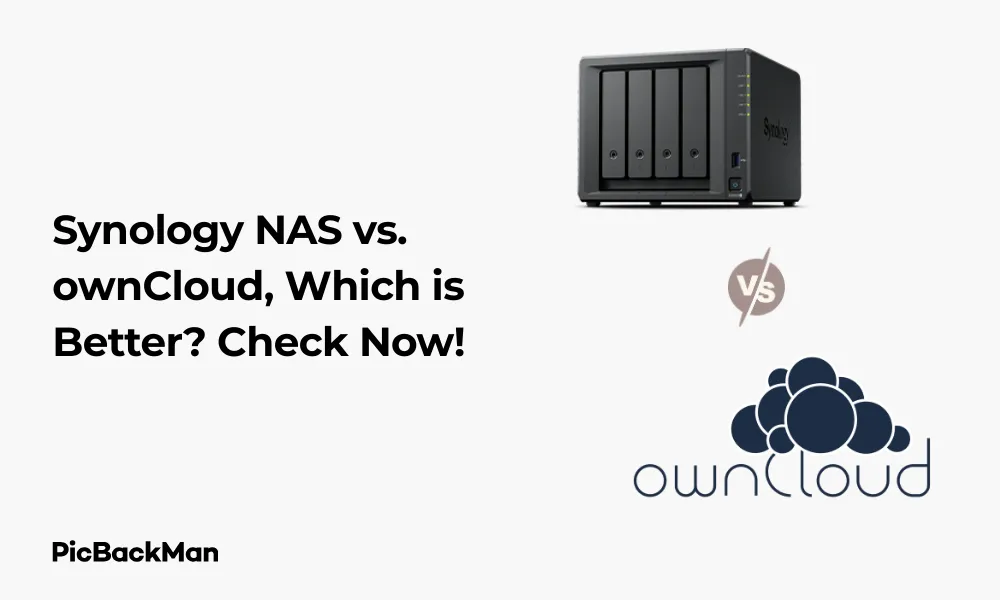
Synology NAS vs. ownCloud, Which is Better? Check Now!

Deciding between Synology NAS and ownCloud for your file storage and sharing needs can be tricky. Both solutions offer ways to store, access, and share your files, but they work quite differently. If you're trying to figure out which option suits your requirements better, you've come to the right place. In this comparison, I'll break down everything you need to know about these popular storage solutions to help you make an informed choice.
Whether you're a home user looking to store family photos and videos, or a business needing secure file access for your team, understanding the strengths and limitations of each platform is crucial. Let's dive into this detailed comparison of Synology NAS and ownCloud to help you decide which solution deserves your investment.
What is Synology NAS?
Synology Network Attached Storage (NAS) is a hardware solution that connects to your network, allowing multiple users and devices to access stored files. Think of it as your personal cloud server that lives in your home or office.
Synology devices come with their own operating system called DiskStation Manager (DSM), which offers a user-friendly interface similar to a computer desktop. This makes managing your files, setting up user accounts, and configuring your storage relatively simple, even for those who aren't tech experts.
Key Features of Synology NAS
- Physical hardware that you own and control
- Multiple drive bays for storage expansion and redundancy
- Built-in apps for file sharing, media streaming, and backup
- Remote access capabilities through QuickConnect or VPN
- One-time purchase with no recurring subscription fees (except for some optional services)
- Data stays within your physical control
What is ownCloud?
ownCloud, on the other hand, is a software solution that you can install on your own server or host with a provider. It's an open-source platform designed to give you the functionality of cloud storage services like Dropbox or Google Drive, but with greater control over your data.
Unlike Synology NAS, ownCloud is primarily software that needs hardware to run on. You can install it on an existing server, a rented virtual private server (VPS), or even on a Raspberry Pi if you're technically inclined.
Key Features of ownCloud
- Software that can be installed on various hardware platforms
- Open-source core with paid enterprise options
- File synchronization across devices
- User management and sharing controls
- Extensible through apps and plugins
- Can be self-hosted or used through a service provider
Detailed Comparison: Synology NAS vs. ownCloud
Now that we understand the basic differences, let's compare these solutions across various important factors to help you determine which might work better for your specific needs.
Setup and Ease of Use
Synology NAS Setup
Setting up a Synology NAS is straightforward for most users. Once you purchase the device, you simply:
- Install your hard drives
- Connect the NAS to your router
- Follow the web-based setup wizard
- Create your admin account
- Set up your storage configuration
The interface is intuitive and similar to using a desktop computer. Most users can have their Synology NAS up and running within an hour, even without extensive technical knowledge.
ownCloud Setup
Setting up ownCloud requires more technical expertise, especially if you're self-hosting. The process typically involves:
- Setting up a server (physical or virtual)
- Installing a web server, database, and PHP
- Downloading and installing ownCloud
- Configuring security settings
- Setting up SSL certificates for secure access
If you're not technically inclined, you can use a hosting provider that offers one-click ownCloud installation or subscribe to ownCloud's hosted service, but this adds to the cost.
Hardware and Cost Considerations
Synology NAS Costs
Synology NAS involves a higher upfront cost but potentially lower long-term expenses:
- Entry-level 2-bay NAS: $200-300 (without drives)
- Mid-range 4-bay NAS: $400-600 (without drives)
- Hard drives: $50-200 each depending on capacity
- Electricity costs for 24/7 operation
- No mandatory subscription fees
A complete entry-level Synology setup with two 4TB drives might cost around $400-500 initially, but you own the hardware outright.
ownCloud Costs
ownCloud costs vary widely depending on how you implement it:
- Self-hosted on existing hardware: Free (software only)
- Self-hosted on new hardware: Cost of server + storage
- VPS hosting: $5-50/month depending on storage needs
- ownCloud Enterprise: Subscription-based pricing
While the software itself is free and open-source, the total cost depends on your hosting choice and technical abilities.
Storage Capacity and Scalability
Synology NAS Storage
Synology offers excellent scalability within their hardware constraints:
- Models range from 1-bay to 24-bay configurations
- Support for drives up to 20TB each (as of 2023)
- Expansion units available for some models
- RAID options for redundancy and performance
- Maximum capacity determined by physical device limits
A home user might start with a 2-bay NAS with 8TB of storage (2x4TB drives in RAID 1), while businesses might opt for larger units with 40TB+ capacity.
ownCloud Storage
ownCloud's storage is limited only by the hardware you run it on:
- No inherent storage limits in the software
- Can use any storage accessible to the host server
- Can potentially scale to petabytes with appropriate hardware
- External storage support (connect to other storage systems)
- Cloud storage providers can be integrated
This flexibility means ownCloud can start small and grow virtually without limits if you have the technical capability to scale your infrastructure.
Data Security and Privacy
Synology NAS Security
Synology offers strong security features:
- Data remains on your premises under your control
- RAID protection against drive failures
- Encryption options for sensitive data
- Two-factor authentication
- Regular security updates
- Firewall and intrusion protection
Since you control the hardware, you have greater physical security over your data, though proper configuration is essential for remote access security.
ownCloud Security
ownCloud provides strong security features as well:
- End-to-end encryption options
- Server-side encryption
- Two-factor authentication
- Granular file sharing permissions
- Activity tracking and audit logs
- Security depends partly on your hosting environment
Security with ownCloud depends significantly on proper server configuration and maintenance, which requires ongoing attention.
Remote Access and File Sharing
Synology Remote Access
Synology makes remote access relatively simple:
- QuickConnect service for easy remote access without complex setup
- Mobile apps for iOS and Android
- File sharing via links with password protection and expiration dates
- Synology Drive for Dropbox-like file sync
- WebDAV support for third-party applications
For most home users, Synology's QuickConnect makes remote access nearly effortless while maintaining reasonable security.
ownCloud Remote Access
ownCloud was built with remote access in mind:
- Web interface accessible from anywhere
- Desktop sync clients for Windows, Mac, and Linux
- Mobile apps for iOS and Android
- Public link sharing with password protection
- File expiration and download limits
- WebDAV support
Remote access setup with ownCloud can be more complex if self-hosting, requiring proper domain configuration and SSL certificates.
Collaboration Features
Synology Collaboration Tools
Synology has expanded its collaboration features:
- Synology Office (document, spreadsheet, and presentation editing)
- Synology Chat for team communication
- Synology Calendar for scheduling
- Synology Mail for email hosting
- Note Station for note-taking
These tools work well for small teams but may not have all the features of dedicated enterprise solutions.
ownCloud Collaboration Tools
ownCloud offers collaboration through its core features and extensions:
- Document editing via OnlyOffice or Collabora Online integration
- Comments and tagging on files
- Activity feed showing file changes
- Calendar and contact management
- Various collaboration apps in the ownCloud marketplace
The open nature of ownCloud means new collaboration features are regularly added through the community.
Backup and Redundancy
Synology Backup Solutions
Synology excels at backup options:
- RAID configurations for drive failure protection
- Hyper Backup for backing up to external drives, other Synology devices, or cloud services
- Snapshot Replication for point-in-time recovery
- Cloud Sync for synchronizing with cloud storage providers
- USB Copy for quick backups to external drives
The built-in redundancy of RAID storage plus comprehensive backup apps makes Synology a strong choice for data protection.
ownCloud Backup Options
ownCloud backup depends more on your infrastructure:
- No built-in RAID (depends on server hardware)
- Database and file system backups must be configured separately
- Can integrate with external backup systems
- Version control for files
- Requires more manual configuration for comprehensive backup
Backup with ownCloud is more of a “bring your own solution” approach, requiring additional planning and implementation.
Performance and Speed
Synology Performance
Synology performance varies by model:
- Entry-level models: Good for home use with limited concurrent users
- Mid-range models: Suitable for small businesses with 10-20 users
- High-end models: Can handle 30+ simultaneous connections
- Network speed is typically limited by your home/office network
- SSD cache options for improved performance
For most home users, even entry-level Synology NAS devices provide adequate performance for file storage and streaming.
ownCloud Performance
ownCloud performance depends entirely on your hosting environment:
- Can be very fast with proper server hardware
- Performance scales with server resources
- Optimization options available for large deployments
- Can implement load balancing for high-traffic scenarios
- Performance highly variable based on implementation
With sufficient resources, ownCloud can outperform Synology for large deployments, but requires more technical expertise to achieve optimal performance.
Ecosystem and App Support
Synology App Ecosystem
Synology has a well-developed app ecosystem:
- Package Center with 100+ official apps
- Media servers (Plex, Video Station, Audio Station)
- Surveillance Station for camera management
- Docker support for running containers
- Virtual Machine Manager on supported models
The Synology ecosystem turns your NAS into much more than just storage, making it a versatile home server.
ownCloud App Ecosystem
ownCloud has its own marketplace of extensions:
- Core apps for essential functionality
- Community-developed extensions
- Enterprise apps for business features
- Integration with third-party services
- Can be extended with custom development
The open-source nature of ownCloud means there's constant development of new features and integrations.
Comparison Table: Synology NAS vs. ownCloud
| Feature | Synology NAS | ownCloud |
|---|---|---|
| Type | Hardware + Software solution | Software-only solution |
| Initial Cost | Higher ($200-600+ for device plus drives) | Lower (free software, hosting costs vary) |
| Ongoing Costs | Electricity, occasional drive replacement | Hosting fees or server maintenance |
| Technical Expertise Required | Low to moderate | Moderate to high (for self-hosting) |
| Setup Time | 30-60 minutes | 1-3 hours (or more for complex setups) |
| Storage Scalability | Limited by hardware (up to 24 bays) | Virtually unlimited with proper infrastructure |
| Physical Control | Complete control over hardware | Depends on hosting choice |
| Remote Access Ease | Simple with QuickConnect | Requires more configuration |
| Backup Features | Comprehensive built-in options | Requires additional configuration |
| Ideal User | Home users, small businesses | Technical users, larger organizations |
Who Should Choose Synology NAS?
Synology NAS is likely the better choice for you if:
- You want an all-in-one solution that's ready to use out of the box
- You prefer minimal technical setup and maintenance
- You want physical control over your data storage
- You need built-in media streaming capabilities
- You want a system that can run various applications beyond file storage
- You have limited technical expertise but still want your own cloud
- You prefer a one-time purchase rather than ongoing subscription costs
Synology NAS is particularly well-suited for home users, families, photographers, media enthusiasts, and small businesses that need simple but effective file storage and sharing.
Who Should Choose ownCloud?
ownCloud might be the better option if:
- You already have server hardware or hosting available
- You need a highly customizable solution
- You have the technical skills to set up and maintain a server
- You want to avoid being tied to specific hardware
- You need to scale beyond what NAS devices can offer
- You want to leverage existing infrastructure
- You prefer open-source solutions with community support
ownCloud is often preferred by IT professionals, larger organizations, educational institutions, and users who value flexibility and customization over simplicity.
Can you use both together?
Importantly, you can actually combine these solutions. Many users run ownCloud on their Synology NAS, getting the benefits of Synology's hardware and ease of use while leveraging ownCloud's file sharing and collaboration features.
To do this, you can:
- Install Docker on your Synology NAS
- Deploy ownCloud as a Docker container
- Configure ownCloud to use the Synology storage
This hybrid approach works well for users who want the simplicity of Synology hardware but prefer ownCloud's interface or specific features.
Quick Tip to ensure your videos never go missing
Videos are precious memories and all of us never want to lose them to hard disk crashes or missing drives. PicBackMan is the easiest and simplest way to keep your videos safely backed up in one or more online accounts.
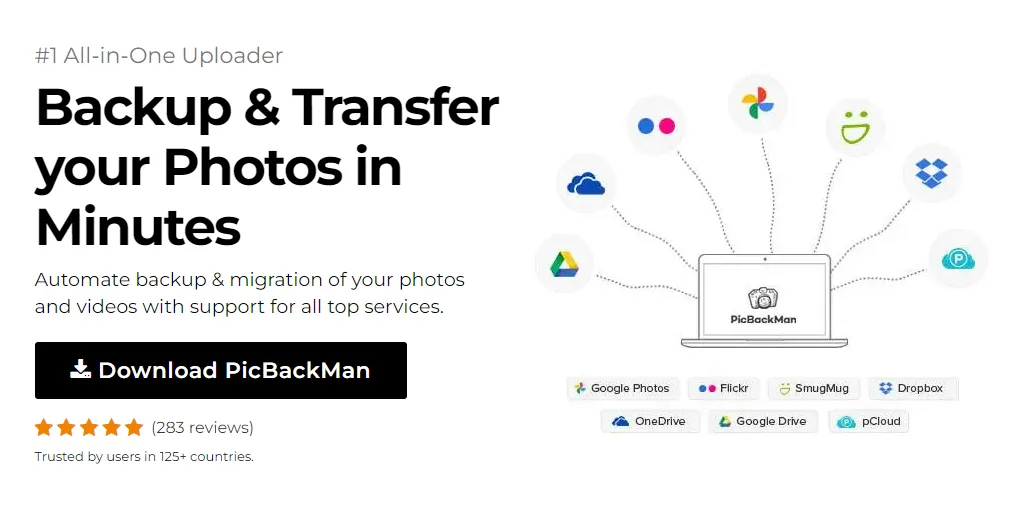
Simply download PicBackMan (it's free!) , register your account, connect to your online store and tell PicBackMan where your videos are - PicBackMan does the rest, automatically. It bulk uploads all videos and keeps looking for new ones and uploads those too. You don't have to ever touch it.
Conclusion
Choosing between Synology NAS and ownCloud ultimately comes down to your specific needs, technical abilities, and preferences. Synology offers a more complete package with combined hardware and software, making it accessible for less technical users. ownCloud provides greater flexibility and customization but requires more technical know-how to implement effectively.
For most home users and small businesses looking for an easy-to-use private cloud solution, Synology NAS is likely the more straightforward choice. For organizations with existing IT infrastructure or users who need maximum customization, ownCloud may be more appropriate.
Remember that both solutions accomplish the core goal of giving you control over your data while providing remote access and sharing capabilities. The right choice depends on balancing your specific requirements for ease of use, cost, scalability, and control.
Frequently Asked Questions
Can I access my files remotely with both Synology NAS and ownCloud?
Yes, both solutions offer remote access to your files. Synology uses their QuickConnect service which makes setup relatively simple, while ownCloud requires proper server configuration but offers similar functionality. Both provide mobile apps and web interfaces for accessing your files from anywhere with an internet connection.
Which option is more cost-effective in the long run?
It depends on your situation. Synology has a higher upfront cost but minimal current expenses (just electricity and occasional drive replacements). ownCloud has lower initial costs if you have existing hardware, but may incur ongoing hosting fees if you don't self-host. For 3-5 year usage, Synology often works out cheaper than paid hosting for ownCloud.
Is it possible to migrate from one solution to the other?
Yes, you can migrate between these platforms, though it requires some work. To migrate from Synology to ownCloud, you'd need to copy all your files to the new ownCloud server. Going from ownCloud to Synology would involve copying files to your NAS and setting up sharing permissions again. User accounts and specific settings would need to be recreated in either scenario.
Which solution offers better protection against data loss?
Synology typically offers better built-in protection against hardware failures through RAID configurations and comprehensive backup applications. ownCloud's data protection depends entirely on your implementation - it can be excellent if properly configured with redundant storage and backup systems, but requires more technical setup to achieve the same level of protection that comes standard with Synology.
Can I run both solutions simultaneously?
Yes, you can run ownCloud on your Synology NAS using Docker. This gives you the hardware reliability of Synology with the interface and features of ownCloud. Many users find this combination provides the best of both worlds, though it does require some additional setup compared to using either solution on its own.